 EN

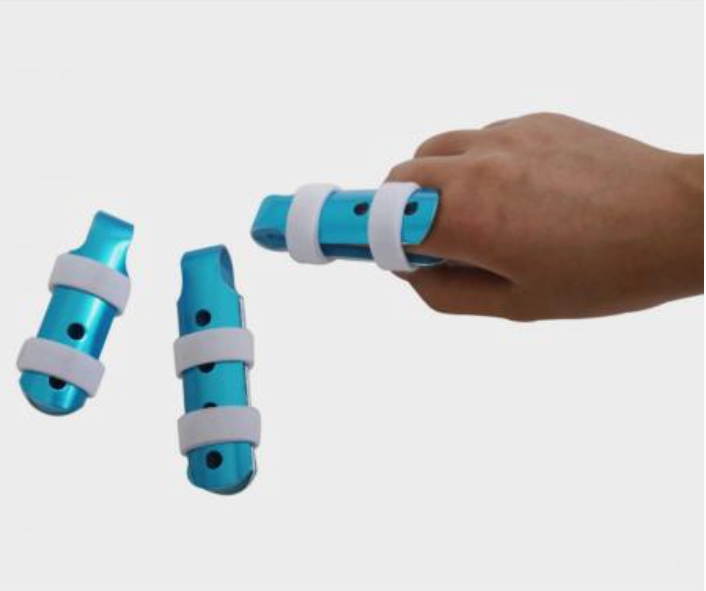
The Business Case Behind a Small Clinical Device
A full finger splint looks like a minor product on a catalog page. It is small, inexpensive relative to most medical devices, and easy to overlook in a procurement strategy. That perception is misleading. For distributors, clinic chains, and occupational health providers, the splint sits at an intersection of recurring demand, clinical credibility, and supply chain risk. Get it right, and it becomes a steady revenue line with low customer friction. Get it wrong, and it generates returns, complaints, and damaged relationships that cost far more than the margin on the product itself.
Understanding the business impact means stepping back from the clinical detail and looking at how the device behaves as a commercial item. Demand patterns, differentiation, sourcing reliability, and total cost of ownership all matter, and they interact in ways that are not always obvious from a price sheet.
Demand Patterns That Make Splints Attractive to Distributors
Splint demand has a few characteristics that make it commercially interesting.
-
Recurring purchase behavior: Patients rarely buy one splint and stop. Clinics restock, occupational health programs reorder, and distributors replenish.
-
Broad application base: Hand injuries span sports, workplace incidents, post-surgical recovery, and chronic conditions, so demand is not tied to a single season or sector.
-
Low unit price, high volume potential: The device is affordable, which keeps it accessible, while volume makes it worthwhile for suppliers.
-
Clinical recommendation driven: When a clinician recommends a splint, the patient or employer usually buys it, which shortens the sales cycle.
That combination is attractive but also competitive. Many suppliers offer full finger splints, and differentiation rarely comes from the product alone. It comes from consistency, availability, and the ability to support the buyer's operational needs.
Where Differentiation Actually Comes From
Price is the easiest lever to pull and the fastest way to erode margin. Suppliers that build a durable position tend to differentiate on other dimensions.
-
Dimensional consistency across batches: Buyers notice when the tenth order fits like the first.
-
Sizing breadth: A supplier that covers a wide range of hand sizes reduces the buyer's need to manage multiple vendors.
-
Documentation and traceability: Enterprises increasingly need batch records and material data, especially in regulated markets.
-
Responsiveness to fit issues: When a complaint surfaces, how fast is it resolved and does the fix hold?
The last point is where manufacturing depth separates suppliers. A trading company can forward a complaint. A manufacturer with in-house tooling and engineering can actually change the part.
Total Cost of Ownership, Not Unit Price
The unit price on a purchase order is only one component of what a full finger splint costs a business. Returns, replacements, clinician time spent re-fitting, and patient non-compliance all carry cost.
| Cost Category | What Drives It | Typical Impact | Ease of Control |
|---|---|---|---|
| Unit purchase price | Material, tooling, volume | Direct and visible | High |
| Return and replacement rate | Fit inconsistency, material failure | Often hidden, can exceed margin | Medium |
| Clinician re-fitting time | Poor initial sizing, unclear guidance | Labor cost, scheduling drag | Medium |
| Patient non-compliance | Discomfort, poor fit, unclear instructions | Lost clinical outcome, repeat visits | Low to medium |
| Inventory carrying cost | Over-ordering to avoid stockouts | Working capital tied up | Medium |
The table makes a simple point. A slightly cheaper splint with a higher return rate or poor fit consistency often costs more in practice than a slightly more expensive one that performs predictably. Enterprises that track total cost rather than unit price tend to make better sourcing decisions.
A Distribution Case With a Costly Lesson
A regional medical distributor in the Pacific Northwest expanded its splint line to capture growing occupational health demand. The initial supplier offered the lowest unit price in the comparison, and the first two orders performed well. By the fourth order, complaints started arriving. Splints from the new batch were consistently a few millimeters narrower, causing fit issues that clinics reported as clinical failures. Returns climbed, and two clinic accounts reduced their order volume. The distributor eventually switched suppliers, but the reputational cost lingered longer than the price advantage ever lasted. The lesson was straightforward. In a device where fit is the primary clinical value, manufacturing consistency is not a nice-to-have. It is the product.
Scaling Supply Without Breaking Consistency
As order volume grows, the pressure on manufacturing consistency grows with it. Tooling wears, resin lots change, and process parameters drift. Suppliers that manage this well typically do a few things.
-
Maintain tooling libraries so proven geometries do not need to be re-engineered.
-
Control incoming material with lot-level traceability.
-
Monitor dimensional output, not just visual inspection.
-
Keep engineering capacity in-house to respond when a deviation appears.
This is where production scale becomes a business asset rather than just a number. Onebrace, a medical protective equipment manufacturer, supports its product lines with a research and development team averaging eight years of specialized experience, which helps resolve fit and material issues as they arise. The company operates 12 complete production lines and maintains a library of more than 1,000 mold designs, with monthly output exceeding one million sets. For distributors and enterprise buyers, that translates into established tooling for a range of splint geometries and the capacity to absorb demand swings without stretching lead times.
The commercial case for the full finger splint is not about a single sale. It is about a repeatable product that clinics trust, patients actually wear, and suppliers can deliver consistently. The businesses that treat it that way tend to build durable revenue from a device that looks, at first glance, unremarkable.