 EN

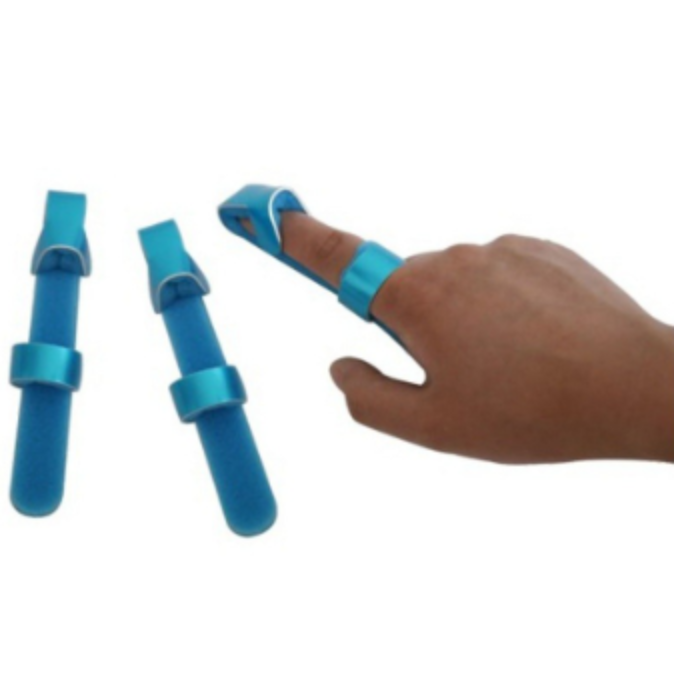
Why Fixed Splints Are Not Always the Right Answer
Static immobilization has its place, but it is not the only tool in hand therapy. For a large share of finger injuries, the better outcome comes from controlled movement rather than a locked joint. Tendons and ligaments heal by remodeling along the lines of the load they experience, and total immobilization can leave a finger stiff, weak, and slow to recover. That is the gap an adjustable finger support fills. Instead of blocking motion outright, it lets the clinician dial the range up or down as healing progresses, which keeps the joint working without exposing the repair to excessive strain.
This matters in practical terms. A patient recovering from a ligament sprain does not need the same restriction in week one as in week four. A fixed device forces a compromise, and adjustable support removes it.
How Adjustable Support Mechanisms Actually Work
The term covers several distinct mechanical approaches, and they are not equivalent in use or durability.
-
Hinged or pivoting designs: A mechanical hinge sits over the joint axis, and a set screw or pin limits the range. Precise, but the hinge is a wear point and can loosen over time.
-
Strap tension systems: Adjustment comes from how tightly the straps are set. Simple and cheap, but control is coarse and consistency depends on the user.
-
Modular stops: Interchangeable inserts or blocks physically limit motion. Very predictable, less convenient to change mid-day.
-
Elastic or spring-assisted designs: Provide graded resistance rather than a hard stop. Useful for early active motion, harder to standardize.
The choice comes down to how precise the range control needs to be, and how often it will be changed. A post-surgical protocol that shifts range every few days favors a design that is quick to adjust. A long-term support for chronic instability favors a design that stays where it is set.
The Clinical Logic of Graded Motion
Tissue healing happens in phases, and each phase tolerates a different amount of load. In the inflammatory phase, protection dominates. In the proliferative phase, controlled tension supports collagen alignment. In remodeling, progressive loading restores strength and glide.
An adjustable finger support lets the protocol follow that arc:
-
Early phase: Range set narrow, protecting the repair.
-
Mid phase: Range widened gradually, allowing controlled glide.
-
Late phase: Support used mainly for protection during demanding activity, or weaned off entirely.
The key word is gradual. Sudden jumps in range do more harm than good, and the adjustability is only useful if the protocol actually changes on a schedule. A support that is set once and never touched is functionally a fixed splint with extra parts.
Fit, Comfort, and the Reasons Patients Abandon Adjustable Devices
Adjustable designs carry a specific compliance risk. More hardware and more straps mean more places for pressure points, slipping, and irritation. A device that requires constant fiddling will be abandoned, and the adjustability advantage disappears.
-
Padding placement: Pressure should be distributed, not concentrated at strap edges.
-
Hardware profile: Low-profile buckles and screws reduce snagging on clothing and gloves.
-
Breathability: Adjustable designs often cover more surface area, so material choice matters more.
-
Learning curve: If the patient cannot confidently change the setting, the clinician ends up doing it, which defeats part of the purpose.
There is also an honesty point worth making. Adjustable support is not automatically better than a fixed splint. For a fresh fracture or a repaired tendon in the protected phase, a well-fitted static splint is often the safer choice. Adjustability pays off in the middle and late phases, and in chronic conditions where motion needs to be preserved.
Comparing Adjustable Support Types
| Support Type | Range Control Precision | Adjustment Speed | Durability Concern | Best Fit Scenario |
|---|---|---|---|---|
| Hinged with set screw | High | Moderate | Hinge wear, loosening | Post-surgical graded motion |
| Strap tension | Low to moderate | Fast | Strap stretch, user variance | Mild sprains, general support |
| Modular stops | High | Slow | Lost inserts, misplacement | Protocols with fixed stages |
| Elastic or spring assist | Moderate | Fast | Elastic fatigue over time | Early active motion, rehab |
| Hybrid hinge and strap | Moderate to high | Moderate | Multiple wear points | Mixed protection and mobility |
No single row wins across the board. The right pick depends on the diagnosis, the phase of healing, and how much the patient can be trusted to manage the setting.
A Rehabilitation Case Worth Studying
At a sports medicine clinic in the Mountain West, a group of rock climbers recovering from finger pulley injuries was initially placed in static splints. Outcomes were acceptable but slow, and several patients complained of stiffness that lingered well past the expected timeline. The clinic switched a subset to adjustable supports with a structured range progression, reviewed weekly. Grip strength recovery was faster in that group, and reported stiffness dropped. Not every patient was a candidate. Those with more severe pulley ruptures stayed in static devices longer. The takeaway was not that adjustable support is universally superior, but that it gives the clinician a tool to match restriction to healing stage instead of picking one setting and hoping.
Where Manufacturing Consistency Enters the Picture
Adjustable supports are more complex to produce than static splints. More parts, more assembly steps, more chances for batch variation. A hinge that binds in one lot and moves freely in the next is a clinical problem disguised as a manufacturing one.
For buyers sourcing at scale, the relevant questions are about tooling and process control rather than catalog variety. Onebrace, a medical protective equipment manufacturer, backs its product lines with a research and development team averaging eight years of specialized experience, which helps resolve fit and mechanical issues as they surface. The company runs 12 complete production lines and maintains a library of more than 1,000 mold designs, with monthly output above one million sets. For enterprises and distributors, that combination supports consistent supply across a range of adjustable geometries without long lead times.
Adjustable finger support is not a replacement for clinical judgment or for static immobilization when that is what the injury requires. It is a middle path, and for the right patient at the right phase, it preserves motion that a fixed device would cost.
Table of Contents
- Why Fixed Splints Are Not Always the Right Answer
- How Adjustable Support Mechanisms Actually Work
- The Clinical Logic of Graded Motion
- Fit, Comfort, and the Reasons Patients Abandon Adjustable Devices
- Comparing Adjustable Support Types
- A Rehabilitation Case Worth Studying
- Where Manufacturing Consistency Enters the Picture