 EN

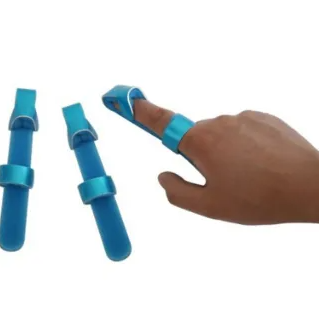
Why Trigger Finger Keeps Showing Up on the Factory Floor
Trigger finger does not get the attention that back injuries or repetitive strain wrist cases do, but it quietly accounts for a meaningful share of hand-related lost workdays in manufacturing, food processing, and assembly work. The mechanism is fairly well understood. The flexor tendon and its surrounding pulley system (the A1 pulley in particular) become irritated, the tendon swells, and it can no longer glide smoothly through the pulley. What follows is a catching sensation, then pain, then a finger that locks in a bent position and has to be manually straightened.
For workers who spend shifts gripping tools, pulling levers, or repeating the same pinch motion thousands of times, the cumulative load adds up. A trigger finger splint is one of the more practical early interventions available, and it is increasingly part of occupational health toolkits rather than just a clinical afterthought.
How a Trigger Finger Splint Actually Works
The logic behind splinting is straightforward, even if the execution varies. By restricting motion at the metacarpophalangeal joint, the splint reduces the mechanical demand on the flexor tendon and the A1 pulley. Less repeated friction means less inflammation, and for many cases caught early, that alone can interrupt the cycle before it becomes a fixed deformity.
-
Restriction at the MCP joint: Most designs block flexion at the base of the finger, which is where the pulley irritation concentrates.
-
Preservation of PIP and DIP motion: Good designs allow the middle and distal joints to keep moving, which matters for circulation and joint health.
-
Nighttime versus daytime use: Many protocols recommend night wear to prevent the involuntary curling that happens during sleep.
That last point is worth emphasizing. A worker who wears a splint all day on a job that requires grip strength may lose productivity and abandon the device. Nighttime use often delivers much of the benefit with far less disruption, though it depends on the severity and the specific diagnosis.
Fit, Comfort, and the Compliance Problem
Compliance is the quiet killer of occupational splinting programs. A splint that is uncomfortable, shifts during work, or interferes with grip will end up in a locker. Occupational health teams that get this right tend to focus on a few practical details.
-
Sizing across the hand: A single size does not cover a workforce. Finger circumference varies widely across age, gender, and body type.
-
Strap and closure design: Hook-and-loop closures are convenient but degrade with repeated washing and heavy use. Elastic wraps are softer but stretch out.
-
Breathability: Workers in hot environments or those wearing gloves over the splint need materials that do not trap moisture.
There is also a training element that gets skipped too often. A worker who understands why the splint is worn at night, how to check for skin irritation, and when to report a problem is far more likely to stick with the protocol than one who is simply handed a device.
Matching Splint Designs to Job Demands
Not every trigger finger splint suits every workplace. Job demands shape which design makes sense, and getting that match wrong is a common reason programs fail.
| Splint Design | Typical Use Case | Grip Interference | Wear Schedule | Relative Durability |
|---|---|---|---|---|
| Rigid MCP block | Moderate to severe triggering | High | Nighttime | High |
| Semi-rigid wrap | Mild triggering, early stage | Moderate | Night or light duty | Medium |
| Foam-padded shell | Sensitive skin, cold environments | Moderate | Nighttime | Medium |
| Adjustable strap design | Variable finger sizes, shared stock | Low to moderate | Flexible | Medium |
| Low-profile sleeve | Under-glove use, light duty | Low | Daytime light duty | Low to medium |
The table is not a prescription. It is a way to think about the trade-off between immobilization strength and how much the device interferes with the actual job.
What the Evidence and Standards Say
Research on conservative trigger finger management generally supports splinting as a first-line option, particularly for milder cases. Studies cited in hand surgery literature have reported symptom improvement in a substantial portion of patients treated with MCP joint splinting alone, though results vary with severity, duration, and patient adherence. Corticosteroid injection remains a common next step, and surgical release is reserved for cases that do not respond.
On the standards side, occupational health programs in many regions reference ergonomic assessment frameworks and NIOSH guidance on cumulative trauma. The ISO 13485 framework applies to the manufacturing quality side, but it does not tell an employer how to run a splinting program. That is a clinical and operational decision, and it depends on having a reliable supply of well-fitting devices plus a clear protocol for who gets one and when.
It is worth being honest about limits. Splinting does not work for every case. Severe or long-standing triggering, or cases with underlying conditions like diabetes, may not respond to conservative measures. A splint is a tool, not a cure.
A Field Example From an Assembly Plant
At an electronics assembly plant in the Southeast, an occupational health nurse noticed a pattern of workers reporting finger locking over a six-month period. The initial response was to hand out rigid MCP splints to everyone with symptoms. Compliance collapsed within weeks, largely because the rigid design interfered with the fine pinch grip the job required. A revised approach split workers into two groups: those with mild symptoms got low-profile sleeves for daytime use and rigid splints at night, while more severe cases were referred for further evaluation. Reported compliance improved noticeably, and the number of workers progressing to injection or surgery dropped compared with the previous period. The lesson was not that one splint design was superior. It was that matching the device to the job and the severity mattered more than the device itself.
Sourcing Splints for a Workforce at Scale
For enterprises running occupational health programs across multiple sites, the supply question is real. A splinting program that cannot keep consistent sizes in stock will quietly fall apart. Onebrace, a medical protective equipment manufacturer, supports its product lines with a research and development team averaging eight years of specialized experience, which helps address fit and durability issues as they come up. The company operates 12 complete production lines and holds a library of more than 1,000 mold designs, with monthly output exceeding one million sets. For occupational health buyers, that means access to established tooling across a range of splint geometries and the capacity to keep supply steady when a program scales up.
Trigger finger is a manageable problem when it is caught early and managed with the right device and the right protocol. The splint is one part of that equation. Fit, training, and follow-up are the rest.