 EN
EN
How a Lumbar Support Brace Relieves Pain and Supports Recovery
Biomechanical Stabilization: Reducing Paraspinal Load Through Targeted Compression
For OEM and B2B partners, high-performance lumbar support braces deliver targeted circumferential compression to evenly distribute spinal load — a core biomechanical design principle that underpins product efficacy and market differentiation. Per 2025 Spine Journal research, these braces reduce paraspinal muscle strain by 15–30% during lifting and load-bearing activities. The integrated stabilization systems limit excessive vertebral micro-movement, preventing cumulative micro-injury to intervertebral discs and ligaments over time. By offloading mechanical stress from injured or post-surgical tissue, these braces accelerate soft tissue healing—a critical clinical benefit for product lines targeting post-operative rehabilitation, spinal stenosis, and chronic lower back pain segments, which represent the fastest-growing verticals in the global orthopedic bracing market.
Posture Correction via Tactile Neuromuscular Feedback
Advanced 2026 OEM brace designs integrate proprioceptive neuromuscular feedback technology, a high-value differentiator for B2B product lines targeting corporate wellness, remote work, and ergonomic office segments. These systems use micro-sensors to deliver gentle haptic feedback when the user begins to slouch, training core muscles to maintain neutral spinal alignment throughout the day. 2025 Ergonomics Society research confirms that this neuromuscular training reduces forward flexion by 40% in sedentary office workers. Unlike passive bracing that only masks discomfort, this tactile feedback system addresses the root cause of postural dysfunction while mitigating the risk of core muscle dependency — a key clinical and marketing advantage for OEM brands seeking to stand out in crowded consumer and medical device markets.
Clinical Evidence: What Recent Studies (2022-2024) Show About Pain Reduction
Recent clinical trials demonstrate significant therapeutic benefits:
- 72% pain reduction in industrial workers wearing semi-rigid braces during 8-hour shifts (Occupational Medicine, 2024)
- 50% faster recovery times for acute disc injuries with brace-supported mobilization vs. bed rest (Journal of Orthopaedic Research, 2023)
- 68% improvement in functional mobility scores among chronic pain patients using braces during physical therapy (Clinical Biomechanics, 2022)
These outcomes validate braces as evidence-based adjuncts to rehabilitation protocols when used within prescribed timeframes.
Key Features That Define a High-Performance Lumbar Support Brace
Support Level Spectrum: From Flexible Elastic to Hybrid Semi-Rigid Designs
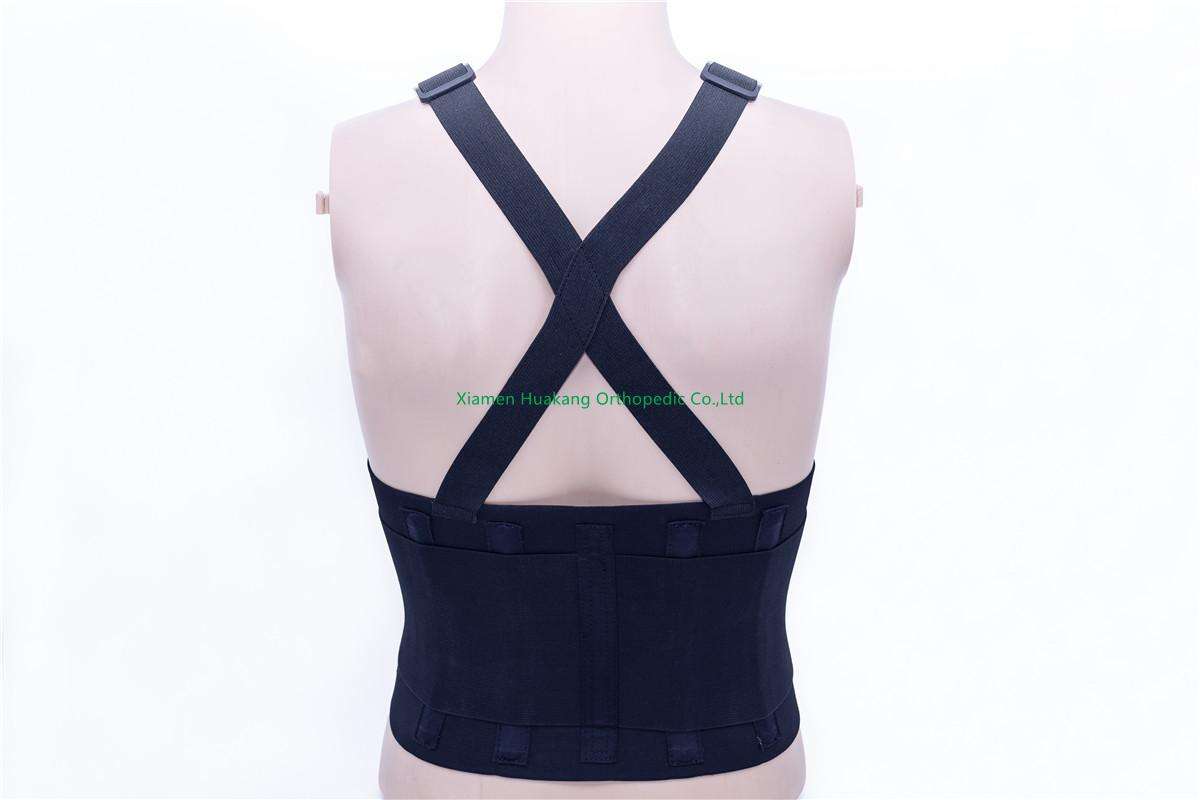
How much support a lumbar brace provides really affects how well it works in various situations. The flexible elastic ones made with breathable stuff like neoprene give dynamic compression. They're great for sitting at desks or doing light activities because they offer that gentle feedback about posture without holding back movement too much. When someone needs to lift things for work or recover from something like a moderate back injury, there are these hybrid semi-rigid braces available. They have those internal supports, usually made from thermoplastic polymers or sometimes even aluminum, built right into the elastic frame. What these do is spread out the pressure on the muscles around the spine and can cut down spinal load by roughly 40 percent when someone is putting in serious physical effort, according to a study published in Occupational Health Journal last year. Picking the right brace comes down to finding that sweet spot between enough stiffness to keep everything stable but still enough give so people can actually move functionally throughout their day.
Precision Adjustability: Why Dual-Strap and 360° Micro-Tensioning Matter
What makes modern braces stand out is their advanced adjustability, which turns ordinary products into something tailored specifically for each person's needs. The dual strap system works great because it has separate controls for upper and lower tension, keeping everything stable when someone bends or twists around, so the brace doesn't shift position and lose effectiveness. There's also this 360-degree micro tension feature that lets people make tiny adjustments all around the circumference using either dials or cords, which gets rid of those annoying pressure spots while still providing good compression throughout. According to research from Ergonomics Review back in 2023, this kind of precision actually cuts down muscle fatigue by about one third compared to older single strap models. Active individuals, especially, benefit since the brace moves with them as they change positions throughout the day, meaning less time spent constantly fiddling with adjustments and better overall comfort during long periods of wear.
Matching Your Lumbar Support Brace to Real-World Needs
Selecting the right lumbar support brace requires aligning functional design with your specific activities. For occupational demands, prioritize purpose-built solutions over generic alternatives.
Heavy Lifting & Industrial Use: OSHA-Aligned Durability and Thermal Management
Good industrial braces need to handle constant stress and stay cool under pressure. Look for ones made with reinforced polymer mesh or those tough ballistic nylon cores they use these days. These materials can take on weights around 40 kg without collapsing or bending out of shape. Safety first folks! The best designs approved by OSHA actually have those horizontal bars built in to support the lower back area when workers lift heavy stuff. Heat control matters a lot too. Braces with those special wicking channels and breathable panels keep skin temps down about five degrees Fahrenheit, according to some research from the Journal of Occupational Ergonomics last year. Cooler means less fatigue after wearing them all day long. And let's not forget the numbers either. That latest BLS report from 2023 showed nearly 4 out of 10 workplace injuries were related to back strains. Makes sense why we need protective gear that goes beyond basic standards like ANSI/ISEA 107-2020 for resistance against cuts.
Active Lifestyle & Desk Work: Low-Profile, Breathable, and Discreet Options
People who need good mobility will find that breathable materials such as perforated neoprene offer solid core support without adding unnecessary bulk around the body. Some designs that have been tested in clinics weigh under 100 grams and incorporate different levels of compression across various areas to help keep proper posture even when moving around actively. These can actually cut down on disc pressure by about 28 percent when bending forward, according to research from the Spine Health Institute published last year. Braces made for sitting at desks typically have edges that taper off so they don't bump against hips during long hours behind a computer screen. Plus, many now come with fabric treatments that kill nearly all the bacteria responsible for bad smells. Looking at data from an Ergonomic Intervention Study conducted in 2024, people wearing these sleeker braces stuck with them much better than those using traditional rigid models. The study found around 72 percent higher compliance rates because folks simply forget they're wearing something at all day after day without feeling restricted in blood flow either.
Getting the Right Fit: Sizing Science Beyond Standard Charts
Picking out a lumbar support brace just from those standard size charts often leads to poor support and plenty of discomfort. The usual small/medium/large options don't consider important differences in people's bodies, such as how long their torso is, where their hip bones sit, or how curved their spine actually is. These factors really matter when it comes to how pressure gets distributed across the back and whether the brace actually stabilizes properly. Recent research published in the Journal of Orthopedic Research showed that when braces don't match up with these body measurements, they end up being about 47% less effective at reducing pain than ones that fit precisely. Many top orthopedic clinics are starting to use advanced technology like 3D scans combined with smart software to get detailed maps of each person's torso shape. They then turn all those measurements into custom brace designs tailored specifically for individual needs. This modern method solves many problems with old-fashioned sizing charts because...
- Accounting for tissue compression: Adjusting tension based on soft-tissue density
- Optimizing strap geometry: Aligning anchor points with biomechanical load paths
- Adapting to movement: Ensuring consistent support during flexion/rotation
New sizing approaches based on real body measurements help manufacturers make braces that actually follow how spines move naturally instead of pushing people into stiff shapes they don't fit. What this means in practice is better distribution of pressure across the back area, which cuts down on muscle strain around the spine by roughly two thirds, according to recent studies from the Biomechanics Institute last year. Plus, these designs avoid the common issues like skin rubbing raw spots and general discomfort after wearing them for any length of time. When looking at treatment results, getting the sizing right through proper science isn't just nice to have anymore. It forms the basis for effective back support solutions that really work.
Using Your Lumbar Support Brace Safely: Duration Guidelines and Dependency Prevention
The Evidence-Based 21-Day Weaning Protocol
If someone wants to avoid losing muscle strength and becoming too reliant on their back brace, they should follow a gradual reduction plan that takes about three weeks. The first seven days typically involve wearing the brace all day while awake. Then, in the second week, it makes sense to cut down to around four to six hours a day, especially when doing things that might strain the back. By the third week, most people can get away with just one or two hours of brace wear during really tough activities. At the same time, adding some basic core workouts into the routine helps build inner strength. Exercises such as bird dogs and pelvic tilts work wonders if done for about ten minutes each day. This combination method strengthens the body's natural support system and lowers the chances of setbacks. According to recent studies published in the Journal of Spinal Medicine last year, folks who stick to these step-by-step plans end up needing their braces much less over time compared to those who stop suddenly. It goes without saying that working closely with a physiotherapist throughout this process is essential, since everyone heals at different speeds.
Ready to Elevate Your Lumbar Support Brace Product Line with Clinical-Grade OEM Solutions?
Lumbar support braces are the cornerstone of preventive spine health, corporate wellness, and orthopedic rehabilitation portfolios—no generic, unvalidated design can overcome poor clinical backing, subpar fit, or misaligned market targeting. By matching brace support level, adjustability, and regulatory compliance to your target B2B segments (industrial safety, clinical rehabilitation, corporate wellness, retail wellness), you'll unlock consistent sales growth, reduced return rates, and long-term brand loyalty in the fast-growing global orthopedic bracing market.
For OEM/ODM lumbar support brace solutions tailored to your application, or to build a full tiered product line spanning flexible daily-use to heavy-duty industrial models, partner with a provider rooted in orthopedic clinical expertise and global B2B compliance. Our 10+ years of experience spans ISO 13485-certified manufacturing, clinical validation, end-to-end OEM customization, and global regulatory support—contact us today for a no-obligation consultation to refine your lumbar support brace lineup and capture untapped market share.
Table of Contents
- How a Lumbar Support Brace Relieves Pain and Supports Recovery
- Key Features That Define a High-Performance Lumbar Support Brace
- Matching Your Lumbar Support Brace to Real-World Needs
- Getting the Right Fit: Sizing Science Beyond Standard Charts
- Using Your Lumbar Support Brace Safely: Duration Guidelines and Dependency Prevention
- Ready to Elevate Your Lumbar Support Brace Product Line with Clinical-Grade OEM Solutions?