 EN
EN

What Efficiency Really Means for a Wrist Brace
Efficiency in a wrist brace is not just about how rigid the support is. It boils down to a balance of three things: symptom relief, joint protection during movement, and the user's ability to wear the device consistently throughout the day or night. An adjustable wrist brace aims to shift that balance favorably. By allowing the user to fine-tune fit and support level, it addresses the reality that a wrist can swell, shrink, or need different positioning depending on the time of day or the task at hand. This adaptability often determines whether a brace gets worn or stays in the drawer. A brace that cannot adjust to these daily shifts usually gets abandoned within the first few days.
The Adjustability Factor: How Fit Drives Outcomes
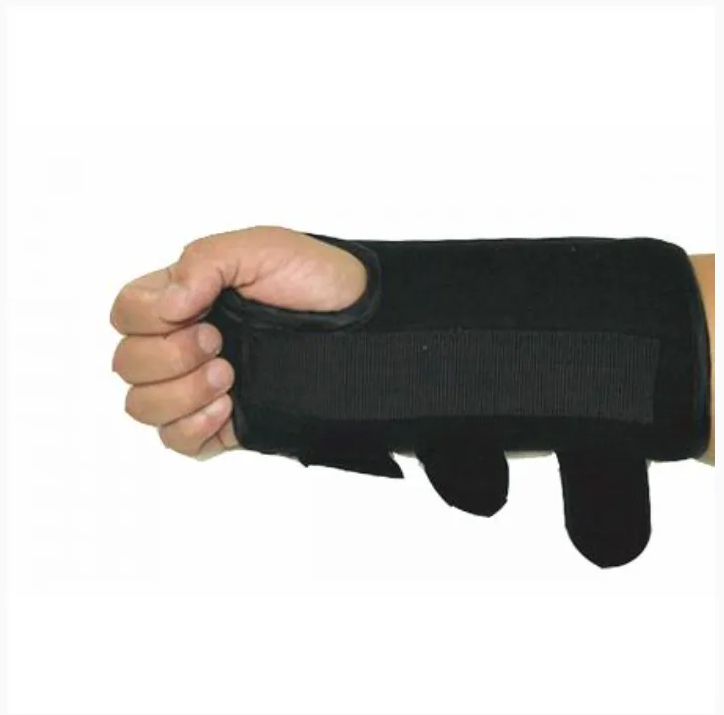
A brace that slips out of place or pinches after an hour does little good. With an adjustable system, typically involving hook-and-loop straps, removable stays, or even dial-controlled tensioning, the user can set the compression to match their anatomy. The median nerve runs through the carpal tunnel, and excess pressure from a poorly fitted brace can actually add to the problem. A snug but not tight hold that keeps the wrist within a safe, neutral range is the target. Many adjustable designs achieve this by letting the proximal strap stabilize the forearm while a second strap manages the wrist angle, distributing force in a way that a one-piece sleeve cannot replicate.
Research Backing: Neutral Position and Pressure Relief
The American Academy of Orthopaedic Surgeons recommends wrist splinting for carpal tunnel syndrome, particularly at night, as a first-line intervention. The underlying science has been mapped out in studies like those in The Journal of Hand Surgery, which show that carpal tunnel pressure spikes dramatically when the wrist bends. In a neutral position, pressure can stay under 5 mm Hg, a safe range for nerve microcirculation. An adjustable brace supports this because it can be set to hold that neutral angle even after swelling reduces or the brace material relaxes over time. Multiple clinical reviews note that consistent neutral splinting can cut nighttime symptom frequency by more than half, which is why adjustability matters, it preserves that therapeutic alignment across weeks of use.
A Real-World Look: Distribution Center Picking
During a product validation cycle at a regional e-commerce fulfillment center, a team with extensive experience in medical protective equipment observed order pickers who handled over 800 items per hour. Many had early symptoms of wrist fatigue and tingling. The facility trialed several support options. Standard slip-on sleeves tended to lose tension after two weeks of daily use and were often cut off or discarded. The introduction of an adjustable wrist brace with dual straps and a removable volar stay changed usage patterns. Workers could loosen the brace slightly during light sorting and tighten it for repetitive lifting. The feedback indicated that around eight out of ten who stuck with the adjustable design reported fewer nighttime symptoms, and importantly, the braces remained in rotation far longer than the fixed-size alternatives. This field observation reinforced a simple point: efficiency lives in the details of daily wear, not just in lab measurements.
Design Trade-offs That Shape Everyday Use
Looking at common design features makes the trade-offs clearer. A dual-strap system uses two independent hook-and-loop bands to control the forearm and wrist separately, which prevents migration and keeps the wrist at a consistent angle, though it takes some practice to avoid overtightening. A removable volar stay, typically a rigid metal or polymer bar that slides into a pocket, delivers nighttime rigidity and daytime flexibility without requiring two separate products, but users can misplace the stay or insert it the wrong way. Dial-controlled tension offers micro-adjustable tightening in small increments, giving precise and repeatable pressure for fluctuating swelling, though it costs more per unit and carries a slight risk of mechanical failure. Breathable spacer fabric, a three-dimensional knit that wicks moisture, cuts down on heat and skin irritation during prolonged wear, yet it may stretch slightly over time and need occasional readjustment. These design factors mean that selecting an adjustable wrist brace requires matching the user's daily routine and comfort tolerance with the right set of features.
When Adjustability Can't Compensate for Other Issues
An adjustable brace is not a silver bullet. If a person has significant thenar muscle atrophy or constant numbness, nerve damage may already be advanced, and surgical evaluation becomes critical. Adjustability also does not replace ergonomic sense, like keeping a workstation set up correctly or taking micro-breaks. In cases where swelling comes from systemic conditions such as rheumatoid arthritis or pregnancy, the brace can manage positioning but will not treat the underlying inflammatory process. Even the best adjustable brace will struggle if worn over a wrist that is habitually bent during sleep without some conscious retraining. Being honest about these limits helps avoid over-reliance on a single device and encourages a more comprehensive care plan.
For distributors and clinics that need reliable stock, production consistency matters as much as design. OneBrace runs 12 complete production lines and holds over 1,000 mold designs, keeping monthly output above one million sets. That scale, backed by a research and development team whose members average eight years of specialized experience in medical protective equipment, supports steady batch quality and fast response to field feedback. When ordering an adjustable wrist brace that clinicians and end users count on, these manufacturing fundamentals help maintain a trustworthy supply.