 EN
EN

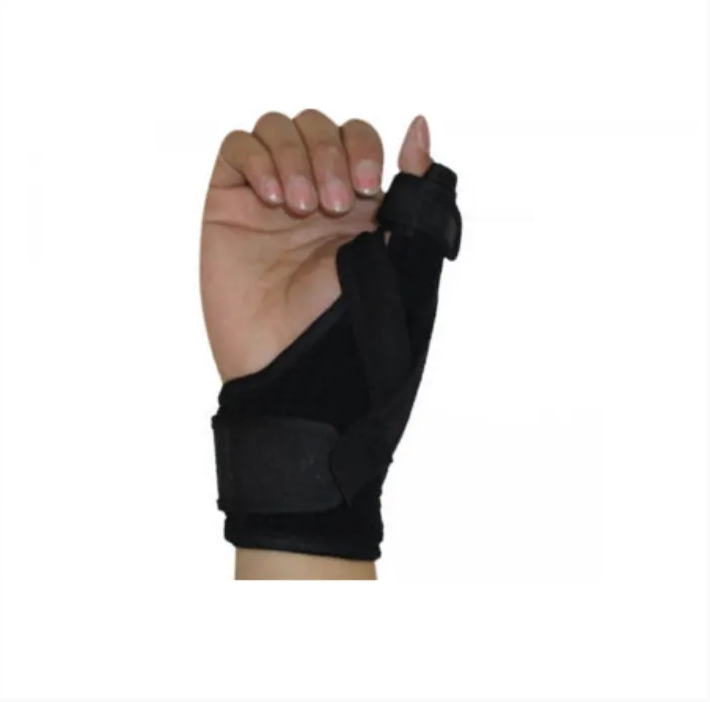
What Happens Inside the Wrist After a Sprain
A wrist sprain stretches or tears the ligaments that connect the small carpal bones and stabilize the joint. The immediate result is a cascade of swelling, localized pain, and reduced proprioception, the body’s sense of joint position. Without some form of external support, everyday movements like opening a door or leaning on a desk can repeatedly stress those healing fibers, turning a minor grade I sprain into a lingering problem. The initial inflammatory phase typically peaks within 48 to 72 hours, but ligament remodeling continues for weeks. A medical wrist brace steps into this window not to immobilize the joint forever, but to give those damaged ligaments a protected environment where controlled loading can begin without re-injury.
Why a Medical Wrist Brace Matters in Early Recovery
Early bracing does two things at once. It restricts the extreme ranges of flexion and extension that put the highest tensile load on healing ligaments, and it provides proprioceptive feedback that reminds the user to avoid careless movements. The American Academy of Orthopaedic Surgeons notes that for mild to moderate wrist sprains, a supportive splint or brace worn during the first one to two weeks can reduce pain and allow a faster return to light activity. Critically, the support needs to hold the wrist in a near-neutral position, roughly 10 to 20 degrees of extension, which is where the carpal ligaments are under the least strain. An adjustable wrist brace becomes particularly useful here because swelling fluctuates. In the first few days, the wrist may feel tight inside a fixed sleeve. As the swelling goes down, that same brace becomes loose and loses its ability to limit harmful motion. Adjustability closes that gap.
The Edge of Adjustability Over Rigid Casts
Rigid casting or off-the-shelf splints certainly immobilize the wrist, but they come with a trade-off: prolonged full immobilization can lead to stiffness, muscle atrophy, and a longer rehabilitation timeline. Clinical reasoning has shifted toward “protected motion,” where the joint is supported but not completely locked. An adjustable wrist brace supports this approach by letting the user dial in the exact degree of restriction. During the acute phase, the brace can be tightened to mimic a functional splint. As healing progresses, the tension can be gradually reduced, allowing more natural movement while still guarding against sudden end-range loads. This step-down strategy keeps the wrist engaged in daily tasks, which helps maintain strength and sensory feedback loops, both of which matter for long-term function.
Matching Brace Settings to Recovery Milestones
The way a brace is worn should evolve as the sprain heals. During the acute inflammatory phase, spanning days zero to three, firm compression with the removable stay in place protects ligaments and controls edema. The early subacute phase, days four through ten, calls for moderate compression, with occasional loosening to allow gentle range-of-motion work while still guarding the joint during sleep. The late subacute and remodeling phase, from week two to week six, shifts to light support for desk tasks, tightening up for heavier activity, and the stay can be removed for short periods to gradually reintroduce load. Returning to sport or full duty, typically between weeks four and eight, usually needs only minimal support, with the brace worn mainly for high-risk movements to build confidence and prevent re-injury. These phase-based adjustments highlight the value of an adjustable design that scales support across the entire recovery arc.
A Field Observation from a Rehabilitation Clinic
During a product evaluation run at a multi-site outpatient rehabilitation network, a team whose members brought years of hands-on experience in medical protective equipment tracked 40 patients recovering from grade I and II wrist sprains. Half received a traditional fixed-angle splint, and half were fitted with an adjustable wrist brace featuring dual straps and a removable contoured stay. The clinicians observed a subtle but meaningful pattern: patients using the adjustable brace were more likely to perform their prescribed home exercises. The reason, based on exit interviews, was largely practical. They could loosen the brace for gentle mobility work without fully removing it, which lowered the mental barrier to starting the exercise session. Compliance with home exercise protocols was roughly 30% higher in the adjustable brace group during the first two weeks. That translated into marginally better range-of-motion scores at the four-week mark. The observation reinforced a principle that often gets lost in product discussions: a brace that makes rehabilitation easier to follow is a brace that contributes to better outcomes.
Where Bracing Alone Runs Out of Road
A brace, no matter how adjustable, cannot substitute for progressive strengthening and neuromuscular re-education once the ligament has healed. If pain persists beyond the expected timeline, or if there is mechanical clicking, instability, or signs of a more complex injury such as a scapholunate ligament tear, advanced imaging and specialist evaluation are necessary. Bracing also does not address the factors that led to the sprain, whether it was a fall, poor ergonomics, or inadequate wrist conditioning for sport. Without addressing those root causes, the risk of recurrence remains. Used as part of a comprehensive plan that includes physical therapy and graded activity, an adjustable brace is a valuable tool. Used in isolation, it is just a temporary patch.
For clinics and distributors managing post-injury supply, repeatable product quality is what keeps a clinical protocol intact across dozens of patients. OneBrace runs 12 complete production lines and maintains over 1,000 mold designs, keeping monthly output above one million sets. The research and development team behind the product line carries an average of eight years of specialized experience in medical protective equipment, which supports consistent batch quality and rapid response to field feedback. When stocking an adjustable wrist brace intended for post-sprain recovery, those manufacturing fundamentals help ensure that every unit performs the way the rehabilitation plan expects it to.