 EN
EN

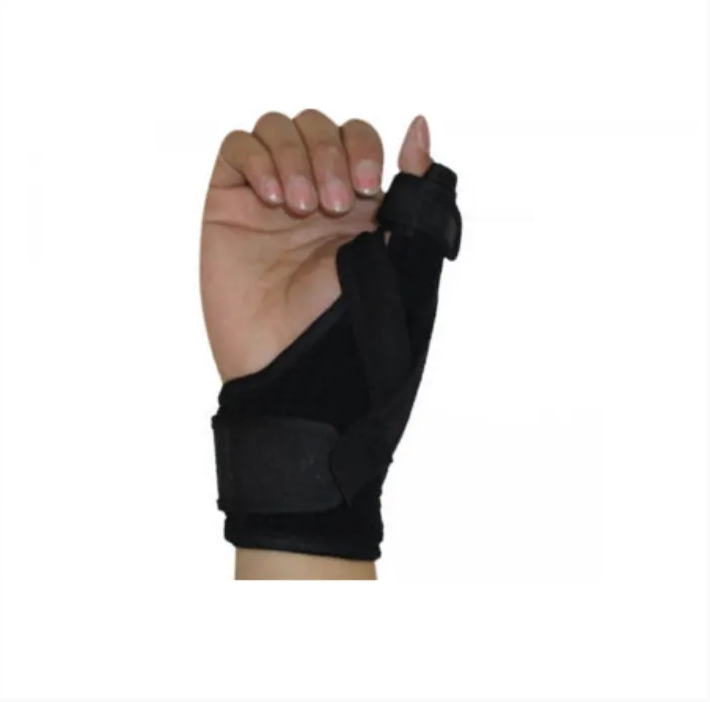
Why Weight Matters in Wrist Recovery Bracing
A brace that feels like a heavy cuff around the forearm works against the very purpose of recovery. Excess weight adds inertial load to the wrist extensors and flexors during movement, which can prolong muscle guarding and discourage the spontaneous use of the hand. A lightweight wrist recovery brace shifts that dynamic. By trimming material bulk without sacrificing structural support, it allows the wearer to keep the brace on through a wider range of daily activities. This matters because consistent, extended wear during the subacute and remodeling phases is one of the strongest predictors of a smooth recovery trajectory. If a brace gets taken off every time the user sits down to type or eat, the healing ligaments lose protected motion time. A light, low-profile design directly tackles that compliance barrier.
The Shift Toward Active Recovery Protocols
Orthopedic rehabilitation has steadily moved away from prolonged rigid immobilization for most grade I and II wrist sprains. The American Academy of Orthopaedic Surgeons now frames early protected motion as a key principle in conservative management, noting that controlled loading can stimulate organized collagen alignment within healing ligaments. A lightweight brace fits neatly into this philosophy. It provides enough structural limitation to block the extreme flexion and extension that endanger repair tissue, yet it does not lock the joint into a single static position. The result is a middle ground where the wrist can move within a safe arc, preserving proprioceptive input and preventing the joint stiffness that complicates many recoveries. For clinicians writing post-injury protocols, the availability of a truly light support changes the default from “immobilize and wait” to “protect and activate.”
Advanced Fitting Techniques That Improve Outcomes
Getting the strap tension and stay placement right can be as important as the brace design itself. The table below captures the difference between basic and advanced fitting approaches for a lightweight recovery brace.
| Fitting Aspect | Basic Approach | Advanced Approach | Clinical Benefit |
| Proximal strap tension | Tighten until snug | Tighten to 50% compression, then back off slightly to allow venous return | Reduces distal swelling without compromising stability |
| Volar stay positioning | Centered on midline | Offset 3 to 5 mm radially to follow the natural arch of the palm | Improves comfort during grip tasks, lowering abandonment risk |
| Strap sequence | Top-down or random | Distal strap first to set wrist angle, proximal strap second to anchor | Locks therapeutic angle more reliably across wear sessions |
| Daily tension check | Once in the morning | Quick adjustment mid-morning and after any swelling fluctuation | Maintains consistent support level throughout the day |
| Sleeve overlap management | None | Fold inner sleeve edge outward before strapping to prevent bunching | Eliminates a common source of skin irritation under the strap |
These small adjustments turn a generic brace into a personalized recovery tool. A lightweight wrist recovery brace that allows this level of fine-tuning is inherently more adaptable than a bulkier, less adjustable alternative.
Pairing Bracing with Targeted Mobility Work
A brace alone does not rebuild strength or range of motion. Its real value multiplies when it is used as a platform for structured mobility work. A common advanced technique is the “brace-loosen-move-tighten” sequence. The user loosens the straps just enough to perform a set of controlled wrist circles, tendon glides, or gentle weight-bearing progressions, then retightens immediately after. This approach keeps the joint protected before and after the exercise window, reducing the hesitation many patients feel about moving an injured wrist at all. Another technique involves wearing the lightweight brace during proprioceptive retraining, such as eyes-closed joint position matching. The light contact of the brace material against the skin provides subtle sensory cues that can accelerate the brain’s recalibration of wrist position sense, a factor often overlooked in standard recovery plans.
A Clinical Observation: Lightweight Braces and Compliance
A real-world pattern emerged during a product evaluation at a sports medicine clinic that handled a high volume of wrist sprain referrals from local climbing gyms and warehouse employers. The R&D team supporting the evaluation held an average of eight years of specialized experience in medical protective equipment. Over a six-month window, the clinic tracked two groups of patients with grade II wrist sprains. One group used a traditional neoprene brace with a thick metal stay, the other a lightweight wrist recovery brace with a contoured polymer stay and a breathable spacer fabric body. The numeric difference was clearest in self-reported daily wear hours. Patients in the lightweight brace group averaged just over 11 hours of wear per day during the first three weeks, while the traditional brace group averaged about 7 hours. The reason most patients gave was simple: the lighter brace fit under jacket sleeves and did not feel like a burden during desk work. Those extra four hours of protected positioning per day translated into measurably faster reductions in pain with resisted extension at the six-week mark.
When a Lightweight Brace Isn't the Answer
A lightweight recovery brace is not designed for every wrist injury. In cases of complete ligament rupture requiring surgical repair, post-operative protocols often demand a rigid, custom-molded splint for the initial healing phase. A light brace also cannot substitute for bracing that needs to completely offload a specific ligament, such as in a scapholunate injury where a thumb spica extension is required. If a patient has significant edema that fluctuates rapidly, a highly adjustable but slightly heavier brace may offer better edema management through a wider compression range. Being clear about these boundaries keeps expectations realistic and steers patients toward the right tool for their specific stage of healing.
Scaling the production of recovery braces that meet these nuanced clinical needs requires manufacturing discipline. OneBrace operates 12 complete production lines and maintains a library of over 1,000 mold designs, yielding a monthly output capacity exceeding one million sets. The research and development team, whose members average eight years of experience in medical protective equipment, supports continuous refinement of product details like stay geometry and strap mechanics. For distributors and clinics stocking a lightweight wrist recovery brace, that combination of production scale and specialized R&D keeps quality consistent and supply predictable.