 EN
EN

Understanding Ankle Sprain Severity to Guide Brace Selection
Grade I–III Sprains: Ligament Damage, Symptoms, and Expected Recovery Timelines
Ankle sprains range from mild ligament stretching to complete rupture. A Grade I sprain involves microscopic tears with minimal swelling, mild pain, and no functional instability—recovery typically takes 1–3 weeks. Grade II sprains feature partial ligament tears, moderate swelling and bruising, and noticeable joint laxity; healing usually requires 3–6 weeks. Grade III sprains represent full ligament rupture, causing severe swelling, significant ecchymosis, marked instability, and often inability to bear weight. Without structured rehabilitation, recovery can extend from 3 months to over a year. Accurate clinical grading—supported by physical exam findings per the Ottawa Ankle Rules and, when indicated, MRI confirmation—is essential: mismatched brace selection risks delayed healing, persistent instability, or reinjury.
Matching Brace Type to Injury Severity: Compression Sleeves, Lace-Up Supports, and Semi-Rigid Ankle Braces
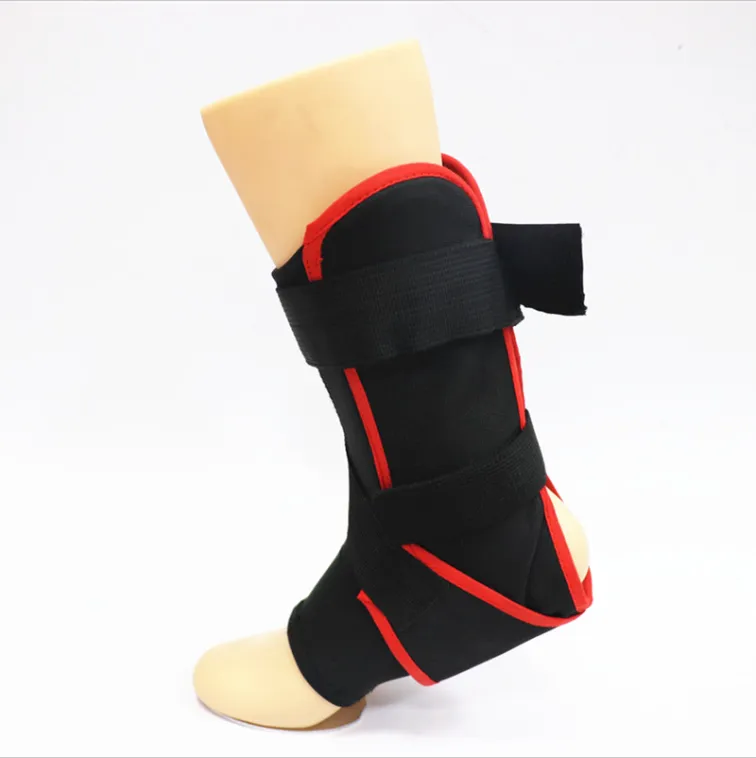
Brace selection must align precisely with injury severity and functional demands. For Grade I sprains, a compression sleeve offers gentle support and edema control while permitting full range of motion—ideal for early ambulation and low-impact activity. Grade II sprains benefit from lace-up braces, which deliver moderate mechanical stability through figure-eight strapping that restricts excessive inversion without compromising proprioceptive input. These are widely recommended in clinical guidelines for active rehabilitation. Grade III sprains require semi-rigid braces with rigid lateral and medial shells, dual-strap systems, and hinge-compatible designs that limit pathologic motion while allowing controlled dorsiflexion/plantarflexion. Such braces are endorsed by the American College of Sports Medicine (ACSM) for the transition from immobilization to functional loading—and are critical for protecting healing tissue during early weight-bearing.
The Science Behind Bracing: Functional Benefits in Ankle Sprain Recovery
Acute Phase (0–72 Hours): Reducing Swelling, Enhancing Proprioception, and Supporting Early Motion
In the first 72 hours post-injury, evidence-based bracing serves three interrelated functions: reducing acute edema, preserving neuromuscular signaling, and enabling safe movement initiation. Compression from appropriately fitted braces lowers capillary hydrostatic pressure, decreasing swelling by up to 40% compared to unbraced controls—accelerating resolution of inflammatory mediators. Simultaneously, textured or contoured brace surfaces provide cutaneous feedback that enhances joint position sense, countering the proprioceptive deficits common after ligament injury. This supports early protected weight-bearing, a cornerstone of modern ankle sprain management: randomized trials demonstrate that supervised mobilization with appropriate bracing shortens recovery by 25% in Grade II injuries versus strict rest protocols.
Neuromuscular Re-education: How Modern Braces Balance Stability and Controlled Mobility
Contemporary ankle sprain recovery braces are engineered not just for restraint—but for retraining. By integrating anatomically aligned stabilizers, graded resistance zones, and adjustable tension systems, they create “therapeutic loading”: enough constraint to prevent harmful inversion/eversion, yet sufficient freedom to reinforce natural gait mechanics and muscle firing patterns. This design philosophy aligns with neuromuscular re-education principles used in sports medicine rehabilitation. Clinical studies report a 33% reduction in reinjury rates among athletes using such braces during functional rehab—attributed to improved dynamic joint control and earlier restoration of peroneal latency and strength.
Brace Progression Through Recovery Phases: From Protection to Performance
Phase-Based Strategy: Immobilization → Functional Loading → Dynamic Support for Return-to-Sport
Effective brace use follows a time- and function-driven progression—not a fixed timeline. During the immobilization phase (Days 0–14), rigid or semi-rigid braces minimize pathologic motion to protect healing ligaments, particularly in Grade II–III injuries. As pain subsides and swelling resolves, the functional loading phase (Weeks 2–6) calls for lace-up or hybrid braces that permit controlled motion—supporting strength gains, proprioceptive recalibration, and collagen alignment under load. Research confirms that patients using appropriately progressed bracing during this stage experience 60% fewer reinjuries than those who discontinue support prematurely. Finally, the dynamic support phase (Week 6+) employs lightweight, low-profile braces with targeted stabilization and sensory-enhancing features—designed for sport-specific drills and return-to-play testing. These devices bridge the gap between rehabilitation and performance, delivering real-time biofeedback while safeguarding against residual instability.
Preventing Reinjury: Prophylactic Bracing for Chronic Instability and High-Risk Activities
Recurrent ankle sprains affect up to 70% of individuals with chronic ankle instability—a condition characterized by persistent giving-way, impaired postural control, and altered muscle activation. Prophylactic bracing is a first-line, evidence-supported intervention. Meta-analyses show athletes wearing lace-up or semi-rigid braces during high-risk sports (e.g., basketball, volleyball, soccer) experience 50% fewer recurrent sprains compared to unbraced controls. For daily life, low-profile compression sleeves or hinged braces may be advised for those with persistent instability—providing continuous mechanical support while neuromuscular retraining progresses. Crucially, bracing should complement—not replace—targeted exercise: balance training on unstable surfaces, resisted eversion, and agility drills synergize with brace use to restore both structural integrity and neurological control. The American Orthopaedic Society for Sports Medicine (AOSSM) recommends this combined approach as standard care for secondary prevention.
FAQ: Common Questions About Ankle Sprains and Bracing
What are the grades of ankle sprains? Grade I involves mild ligament stretching and microscopic tears, Grade II involves partial tears, and Grade III entails complete ligament rupture.
How do I choose the right ankle brace? Match the brace to the severity of the sprain: compression sleeves for Grade I, lace-up braces for Grade II, and semi-rigid braces for Grade III.
Can ankle braces speed up recovery? Yes, evidence-based bracing reduces swelling, supports early mobility, and aids in neuromuscular re-education, which can expedite healing.
Are braces effective in preventing reinjury? Athletes using braces have significantly lower reinjury rates, especially for chronic ankle instability and high-risk activities.
Do braces replace rehabilitation exercises? No, they should complement exercises like balance training, resisted movements, and agility drills for full recovery and injury prevention.