 EN
EN

Introduction
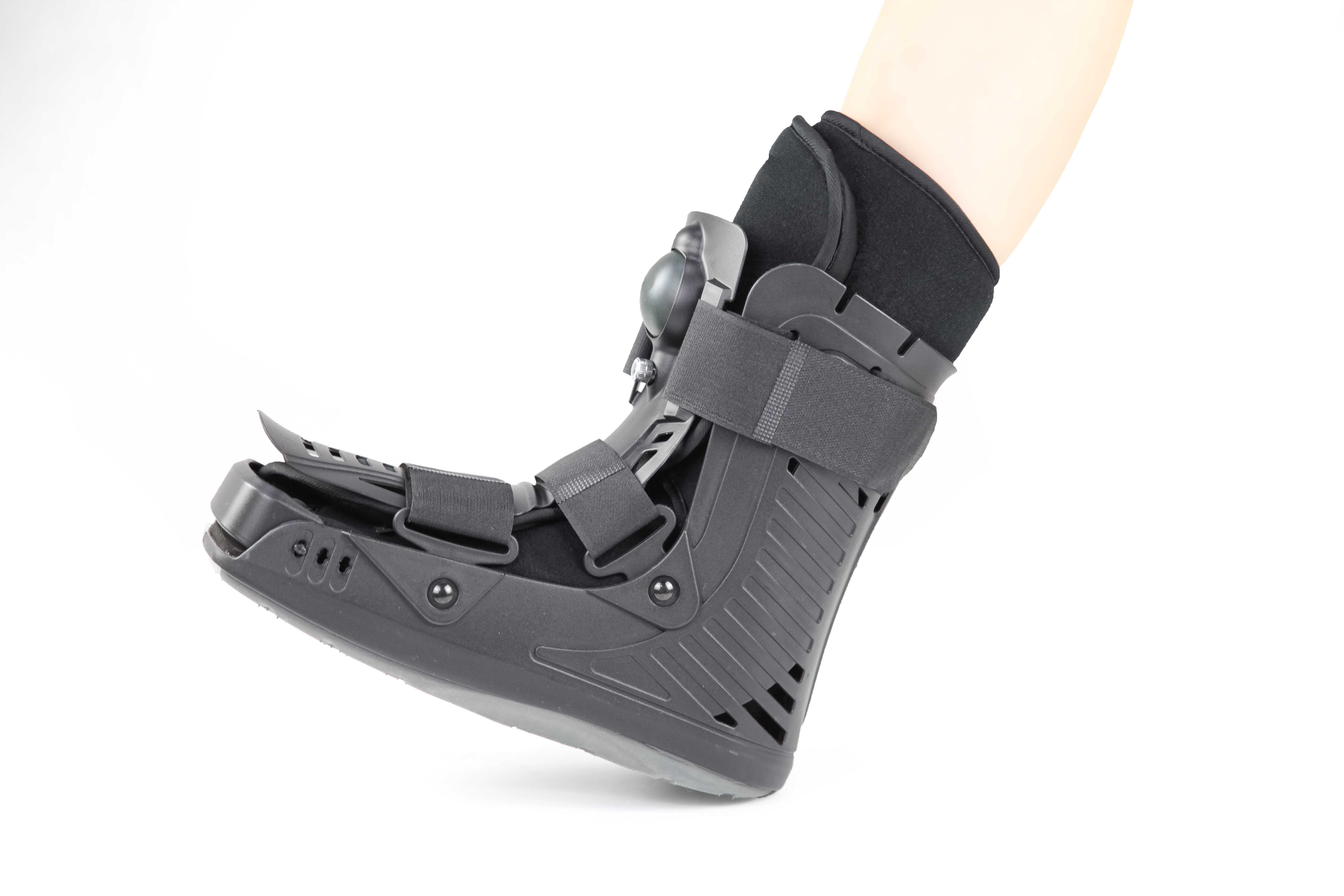
The healthcare model for delivery of services has changed a lot in the last five years, bringing the focus away from just hospitals to a mixture of "hospital + community + home" system. Getting rehabilitation done at homes and communities is the new trend, so that patients get both the long-term follow-up and the professional intervention. It is through functional training, safe weight bearing, and rehabilitation that medical walking boot is most in the limelight today. The boot has gone much further than its first incarnation as a post-surgery immobilizer only. Following five pillars: background drivers, clinical pathways, product design, service integration, and market/commercial implementation, this article step by step reveals the role of the walking boot and how it can be used in the home rehabilitation ecosystem. Besides this, it serves as a manual guide to manufacturers, rehab providers, and sales teams.
Background Drivers: Why Home Rehabilitation Has Become the Norm
Rehabilitation home setting is being forced to happen due to several long-term and short-term factors. Firstly, demographic change refers to the age structure of population shifting toward older people which leads to increased number of patients who are in need of chronic disease management and/or postoperative rehabilitation. Secondly, limited access to rehabilitation services and equipment due to uneven distribution especially in smaller cities and rural areas. Thirdly, patients demand more convenient, personalized services and the fact that they are not willing to have multiple visits to hospital is also taken into consideration. Lastly, combination of digital health and remote monitoring technologies have reached such an advanced level that therapists are able to supervise through video, sensors, and cloud data. If the behavioral changes caused by public health events are considered as well together, it can be said that home rehab was a luxury before while now is the main mode in many situations.
Functional Positioning of the Walking Boot in Home Rehabilitation
Giving Physical Protection:
The walking boot enclosing ankle in a rigid or semi-rigid shell limits the dangerous ankle movements (e.g., excessive inversion/eversion or torsion), thus maintaining the alignment of bone fractures and wound healing after surgery.
Allowing Weight-Bearing through Progressive Support:
The walking boot with its features like insoles, wedges, or adjustable soles permits the patient a gradual transition through non-weight-bearing to partial and eventually full weight-bearing stages, thus making them independently walk through different healing phases safely.
Creating Training Space for Rehabilitation:
The walking boot equips a controlled setting to re-learn walking, with the help of remote monitoring; physiotherapists are capable of assessing step, posture, and balance via video conference.
Capturing Data (optionally):
The top level versions are able to work together with pressure-sensing insoles and accelerometers, which record step numbers, plantar pressure distribution, gait symmetry, and other parameters that are very helpful to clinicians making final decisions.
Clinical Pathways: From Acute Protection to Functional Recovery
Since an individual's rehabilitation differs from others, a walking boot usage can be divided into three stages:
Acute Protection Phase (typically 0–2 weeks after surgery or fracture)
The primary objective during this phase is pain and swelling control without also causing more trauma. Precautionary measures like using a high-stability walking boot, limiting the walking distance, avoiding stairs, and remote checking of the wound/skin are considered very important. However, if the patients cannot come back to the clinic, make sure to provide them with proper "red flag" (e.g., increasing swelling, severe pain, fever, pus discharge) as well as an immediate contacting method to the clinicians.
Controlled Weight-Bearing Phase (2–6 weeks, adjusted by clinical assessment)
Goal: Initiate partial walking and functional loading. Video communication is employed by therapists to oversee the execution of standing balance exercises, walking over a short distance, and passive/active range of motion exercises. The boot prevents inadvertent/faulty movements while at the same time allowing controlled fore-and-aft loading; the use of wedges or forefoot plates can gradually increase anterior loading.
Functional Recovery Phase (approximately 6 weeks or upon radiographic healing)
The goal is to recover the ability to walk daily and also to restore dynamic stability. Keep progressing training with strength, balance, and gait symmetry while loosening boot restrictions (e.g., no more partial supports, protective shoe/insoles). Digital monitoring (if available) provides an objective measure of progress and helps to modify practice intensity.
Product Design: Key Priorities for Home Use
The design of walking boot should not only meet the traditional hospital needs but also properly serve the home rehab situations, with special attention to usability, maintenance, and comfort. The following are the suggestions for the top priorities:
Easy don/doff and one-handed operation:
Most individuals, especially the seniors or those with limited functional ability on one side, cannot use two hands. Therefore, straps/buckles/velcro can be easily operated single handedly and should have visual/tactile indicators (color/arrows) that are clear.
Hygiene and material considerations:
Being at home for a long time will result in sweat and odor, thus, it is required for the liners to be removable and washable, and for the materials to be antimicrobial of medical grade so that the risk of skin infection can be minimized.
Modularity and adjustability:
Having interchangeable insoles, wedges, forefoot plates, and shaft heights will allow for adaptation to other healing phases and foot anatomy without resorting to custom manufacturing.
Compatibility with digital add-ons:
Reserved insole space or interfaces for pressure sensors, accelerometers, or Bluetooth modules will help meet clinical needs for data-driven management.
Service Integration: Product + Education + Remote Support
Just acquisition of hardware is only a starting phase. To make a walking boot useful as a home rehabilitation system, it should synchronize with education and remote support to be a replicable service package.
A 3-minute instructional video ("getting started") pack (putting on/taking off, adjustment, cleaning, and red-flag signs) serves not only as a “good-will” tool but also helps reduce hotline calls and practice returns.
Pre-designed rehab plan templates: Ready-made schedules (daily step targets, balance drills) for typical clinical scenarios facilitate the more scalable remote supervision.
Remote follow-up SOPs: Decide on the timing of conducting video checks, ways of weight-bearing adjustment, and the deciding standard for in-person reevaluation recommendations; convert forms and reminders into digital format.
After-sales and recycling workflows: In the case of long-term care or rental, specify disinfection, liner replacement as well as return logistics to ensure safe reuse.
Market and Commercialization Strategy
The markets for walking boots comprise a few distinct segments: hospitals and rehab centers (institutional purchase), community/long-term care (rental or bulk purchase), individual consumers (e-commerce/retail), and international distributors. Deliver different messages and use different channels with each of these groups:
Hospitals/rehab centers would emphasize the importance of clinical evidence, regulatory compliance, and supply stability.
Community/long-term care professionals could benefit from on-site training where maintainability, rental options, and total cost of ownership can be thoroughly presented.
It is more likely that comfort, ease of use, and availability of short educational materials will rank highest for individual consumers who will be reached mainly via e-commerce and social media.
International distributors need to be equipped with multilingual documents, regulatory files, and demonstration units to make the procurement process easier.
Practical Steps to Start Home Rehabilitation
Developing a modular product platform (standard shell + optional modules).
Trial the liner and shell materials for robustness and antimicrobial characteristics.
Make short educational clips (wearing/removing, cleaning, and common questions).
Implement pilot programs with one or two rehab centers to collect RWE.
Getting ready with multilingual sales kits and demonstration units for distributors.
Plan for rental and service operations (disinfection and liner changing).
Attach a quick-start guide and a QR code linking to video materials on the packaging.
Set up digital customer support and follow-up forms.
Risks and Mitigations
You can decrease the chance of pressure sores and infections by using ventilated antimicrobial liners, having regular inspections, and adhering to washing guidelines.
Misuse resulting in re-injury: Lower the risk with an easy, one-handed operation, a requirement to watch a very short tutorial, and online check-ins.
Data privacy issues (with smart add-ons): Put in place data minimization, encrypted transmission, and transparent user consent.
Reimbursement obstacles: Perform cost-effective analysis and RWE studies to get payer coverage.
Conclusion: From Tool to System—Scaling the Value of Walking Boots
The walking boot's function at home rehab cannot be seen solely in the hard shell; rather, it lies also in its connection to rehab plans, education, remote monitoring, and servicing workflows. By leveraging product, service, and data in conjunction, manufacturers obtain a competitive edge, whereas focusing solely on price leads to a race to the bottom in which only one law applies—lowest price wins. Walking boots enable therapy providers to safely delegate patient supervised recovery at home, thus liberating clinic space capacity. Besides, the patient with a walking boot fitted conveniently and practically for safety measures, stands to gain from a dignified rehabilitation process, among other factors.
Table of Contents
- Introduction
- Background Drivers: Why Home Rehabilitation Has Become the Norm
- Functional Positioning of the Walking Boot in Home Rehabilitation
- Clinical Pathways: From Acute Protection to Functional Recovery
- Product Design: Key Priorities for Home Use
- Service Integration: Product + Education + Remote Support
- Market and Commercialization Strategy
- Practical Steps to Start Home Rehabilitation
- Risks and Mitigations
- Conclusion: From Tool to System—Scaling the Value of Walking Boots