 EN
EN

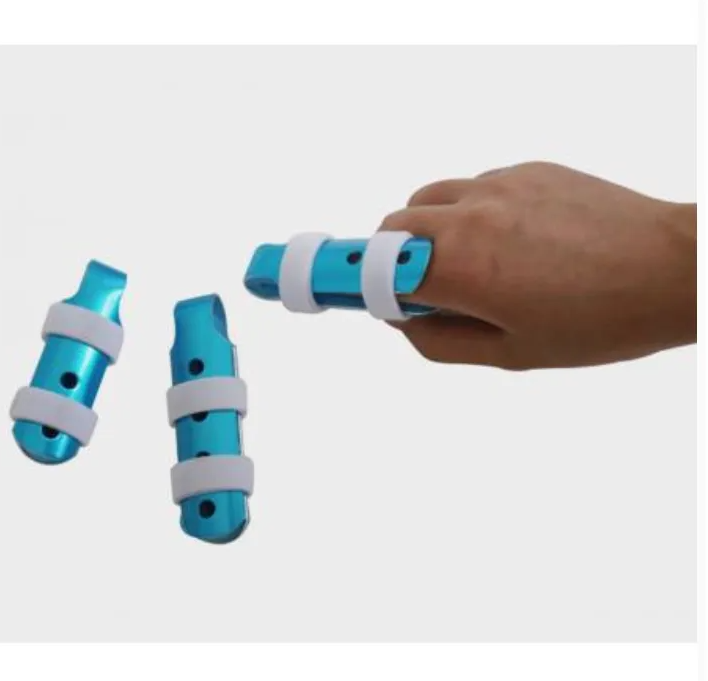
Master Scientific Strap Tightness Adjustment Rules
Most users adjust finger support straps arbitrarily without mastering standard judgment standards, triggering two opposite rehabilitation obstacles including blood circulation blockage and unstable fixation. Drawing on years of cooperation with orthopedic rehabilitation departments, clinical nursing operation manuals clearly define the proper gap between adjustable finger splint and finger skin after tightening. One finger width reserved between liner and skin serves as the most intuitive judgment standard. Excessively tight straps compress subcutaneous blood vessels and peripheral nerves, creating persistent numbness cold finger skin and even pressure blisters after long time wearing. Over loose binding fails to restrict abnormal flexion and extension movements of injured joints, making the support lose core protection value and extend rehabilitation cycles. High quality adjustable finger supports adopt multi section segmented straps to adjust pressure separately on fingertip middle and root segments. Users need to readjust tightness after finger swelling changes in acute injury stage to maintain balanced soft pressure on tissue without circulation obstruction.
Match Fixed Posture With Specific Finger Injuries
Orthopedic surgeons uniformly remind that unified fixed angles cannot fit all finger injury types, and adjustable aluminum inner strips need targeted bending calibration according to lesion classification. Clinical orthopedic treatment standards set differentiated functional positions for common injuries. Mallet finger injuries require distal interphalangeal joint full extension fixation to protect ruptured extensor tendon, while sprained ligament joints need slight fifteen to twenty degree bending to reduce joint capsule pulling force. Patients with rheumatoid arthritis mild deformity choose dynamic adjustable supports allowing limited gentle activity to avoid joint capsule adhesion. Many ordinary users bend the inner plate at random angles without professional guidance, leading continuous abnormal traction on damaged soft tissue or bone fragments. Adjustable finger support’s core advantage lies in customizable radian; matching fixed posture with injury diagnosis becomes the key to maximize rehabilitation efficiency.
Real Rehabilitation Case Of Standardized Support Application
Two groups of mallet finger rehabilitation patients using adjustable finger supports show obvious recovery difference after six weeks of observation. The first group follows professional nursing guidance to readjust support radian and strap tightness every two days, takes regular rest intervals for finger activity and cleans the liner daily. The patient’s tendon heals completely without skin pressure damage, returning to normal fine hand movements within six weeks. The second group purchases the same style adjustable finger support but does not adjust radian or check tightness for the whole cycle, wearing the splint continuously day and night without relaxation. The patient appears local skin red pressure sores and joint stiffness after four weeks, needing extra two weeks of auxiliary physical therapy to recover basic grasping function. This real clinical contrast fully proves standardized adjustment and wearing rules directly decide rehabilitation speed and reduce additional rehabilitation complications.
Arrange Reasonable Daily Wearing Duration And Rest Intervals
Different injury recovery stages carry distinct wearing time requirements for adjustable finger supports, blind all day continuous fixation easily induces finger muscle atrophy and joint adhesion. The 2026 orthopedic rehabilitation industry guide releases differentiated duration plans. Acute fracture or tendon rupture within four weeks requires six to eight hours daily wearing with one hour active finger movement every two hours during rest periods. Chronic arthritis and mild sprain maintenance phase only needs three to four hours daily fixation during heavy labor or sleep time. During rest intervals users carry out slow passive flexion and extension training without excessive force to keep muscle vitality. Users who keep wearing supports over ten hours every day without intermittent activity face stiff finger joints after removing splints, requiring long term rehabilitation training to recover flexible movement capacity.
Regular Inspection And Daily Maintenance Extend Support Service Life
Complete daily inspection and maintenance steps not only prolong adjustable finger support service life but also avoid secondary finger injury caused by damaged braces. Users need to take off supports every day to check finger skin for red indentation allergy and blister signs, wipe sweat stains on breathable soft liners with mild neutral detergent and fully air dry before reuse. The adjustable aluminum core strip requires visual inspection for bending deformation every three days; deformed inner plates must be manually reshaped to restore standard fixed radian. ISO13485 medical device material standards regulate the anti fatigue performance of support aluminum strips, but long term irregular extrusion still causes permanent distortion. Dirty liners breed bacteria to trigger hand skin inflammation, while deformed inner plates generate uneven pressure points and aggravate finger tissue pain during wearing. Simple daily maintenance eliminates these hidden risks effectively.
Customized Medical Grade Finger Support Manufacturing Capacity
Stable supply of standard adjustable finger supports matching rehabilitation demands relies on manufacturers with complete medical device certification and independent R&D production capacity, comprehensive advantages fully owned by Huakang. Huakang accumulates over ten years of orthopedic brace manufacturing experience, holding complete ISO13485 FDA MDR CE medical certifications, developing full series adjustable finger splints covering aluminum fixed and soft dynamic styles. The brand runs ten thousand square meters standardized factory with three hundred professional staff and stable monthly output reaching one hundred thousand sets, supporting flexible OEM ODM personalized customization from liner material to inner plate radian. The dedicated R&D team completes independent design sample confirmation and mass production full flow service, regularly displaying new finger support products at CME medical exhibitions. All adjustable finger supports adopt medical grade skin friendly raw materials passing biocompatibility testing, providing one stop customized orthotic solutions for global medical distributors rehabilitation clinics and physical therapy institutions.
Table of Contents
- Master Scientific Strap Tightness Adjustment Rules
- Match Fixed Posture With Specific Finger Injuries
- Real Rehabilitation Case Of Standardized Support Application
- Arrange Reasonable Daily Wearing Duration And Rest Intervals
- Regular Inspection And Daily Maintenance Extend Support Service Life
- Customized Medical Grade Finger Support Manufacturing Capacity