 EN
EN

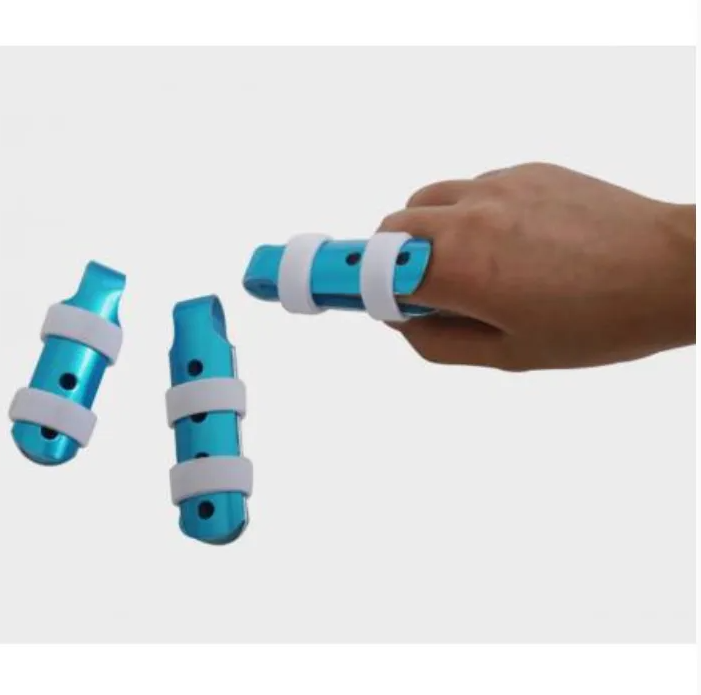
Real clinic operation data contrasts surgical treatment and brace rehabilitation costs
Many orthopedic outpatient and rehabilitation center administrators share full cycle financial records comparing surgical intervention and mallet finger brace conservative rehabilitation programs. A community orthopedic clinic tracked all finger injury patients for twelve months in 2025, recording average total expenditure for surgical suture repair including operating room fees anesthesia medicine and post-op dressing change visits. Each surgical case occupied three times more clinic labor hours and generated occasional complication compensation risks from infection or tendon re-rupture. After launching standardized mallet finger brace rehabilitation packages in early 2026, the same facility accepted over two hundred mild mallet finger patients without operating room resource occupation. Each brace treatment cycle only required two short fitting follow-up visits, and zero postoperative risk compensation occurred throughout the whole year. Another private rehab center expanded orthosis service lines and saw thirty seven percent growth in new patient traffic via word of mouth referrals from fully recovered brace users. These long-term real medical operation records fully prove mallet finger brace projects deliver far healthier return metrics compared to high investment surgical treatment workflows for mild tendon injuries.
Core direct cost inputs of mallet finger brace rehabilitation projects
The clear direct cost components of mallet finger brace programs form the basic foundation of 2026 ROI calculation for medical operators. The first fixed expenditure is bulk orthosis procurement cost, which drops significantly via factory batch orders instead of retail single unit sourcing. Second labor input covers professional therapist fitting time and regular follow-up consultation sessions for patients in the eight to twelve week fixation cycle. Third auxiliary cost includes basic inspection supplies such as skin assessment tools and replacement foam liners distributed during patient return visits. No expensive surgical consumables operating equipment or overnight ward overhead exist within brace rehabilitation workflows. Batch purchasing from certified orthosis manufacturers further cuts per unit hardware cost by nearly forty percent, lowering the average capital investment required to treat one mallet finger case and lifting baseline profit margins for clinical service lines.
Global orthopedic rehabilitation industry standards set authoritative ROI calculation benchmarks
Unified MDR medical device regulatory rules and international orthosis economic research white papers release credible standardized ROI evaluation rules for 2026 medical facilities. European orthopedic industry financial research institutes define complete statistical dimensions including orthosis procurement labor auxiliary expense patient service revenue referral incremental income risk loss savings when calculating brace project returns. Senior medical economic researchers publish industry analysis pointing out compliant non-invasive orthosis rehabilitation projects carry lower capital threshold and faster payback cycles than minor hand surgery business modules. Third party medical operation audit institutions use twelve month continuous patient data as the core evaluation period for mallet finger brace ROI verification, separating low-margin retail orthosis resale and full clinical fitting service business models clearly.
Indirect income and risk reduction returns brought by mallet finger braces
Beyond direct service gross profit, mallet finger brace programs generate multiple indirect revenue and risk reduction returns that boost overall 2026 ROI figures. Recovered patients with satisfactory non-invasive treatment experience actively refer colleagues family members with similar finger injuries, forming steady new patient inflow without additional clinic advertising spending. Conservative brace therapy eliminates compensation losses caused by surgical infection tendon re-tear and anesthesia adverse reactions that frequently appear in minor hand operations. Orthosis services do not occupy limited operating room time slots, freeing surgical resources for severe fracture cases with higher single case revenue. Clinics running mallet finger brace lines also build comprehensive mild injury rehabilitation brand positioning, capturing long term patient loyalty for future wrist elbow orthosis treatment demands.
Full 12-month ROI numerical breakdown for medical operators
Standard twelve month operation data in 2026 shows transparent return data for clinics launching mallet finger brace rehabilitation. After deducting brace procurement therapist labor and auxiliary material direct costs, qualified medical facilities maintain a stable sixty plus percent gross margin per patient treatment cycle. New patient numbers driven by brace referral traffic rise thirty to forty percent year on year for operators with standardized fitting protocols. Full capital invested in initial bulk brace stock can be fully recovered within eight months of steady patient intake. When factoring in avoided surgical complication compensation and freed operating room high-value case capacity, comprehensive annual net profit growth reaches more than fifty percent compared to clinics without orthosis rehabilitation services. The low upfront capital threshold and fast turnover speed make mallet finger braces one of the most cost efficient rehab service expansions in 2026 orthopedic markets.
Qualified orthosis manufacturer supplies cost effective mallet finger brace batches
Stable supply of certified high cost performance mallet finger braces for medical clinic batch procurement relies on standardized large scale orthosis production capacity. Huakang holds more than ten years of orthopedic brace manufacturing experience with complete MDR CE FDA ISO13485 international medical certifications covering all finger orthosis series. The brand provides flexible bulk OEM order schemes and free pre-production samples for rehabilitation institutions, optimizing unit procurement cost via large batch automated assembly lines. Differentiated daytime thin braces and rigid night mallet splints match full cycle clinical rehabilitation demands, with consistent quality control to cut post-delivery after-sales loss for medical buyers. Long-term stable global shipment arrangements support continuous orthosis stock replenishment for rehab clinics, maintaining steady patient service turnover and predictable ROI performance throughout the full 2026 operation cycle.
Table of Contents
- Real clinic operation data contrasts surgical treatment and brace rehabilitation costs
- Core direct cost inputs of mallet finger brace rehabilitation projects
- Global orthopedic rehabilitation industry standards set authoritative ROI calculation benchmarks
- Indirect income and risk reduction returns brought by mallet finger braces
- Full 12-month ROI numerical breakdown for medical operators
- Qualified orthosis manufacturer supplies cost effective mallet finger brace batches