 EN

Why Static Finger Splints Still Matter in Modern Hand Therapy
Hand therapy has come a long way. Dynamic traction devices, 3D-printed orthoses, and smart wearables now populate clinic catalogs. Yet when a patient walks in with a mallet finger, a boutonniere deformity, or a freshly repaired flexor tendon, the conversation almost always circles back to the same workhorse: the finger static splint. There is a reason for that. Static immobilization does one job extremely well, which is holding a joint at a fixed angle long enough for tissue to heal without re-injury. Nothing fancy, nothing powered, just reliable positional control.
The catch is that "static splint" covers a wide spectrum. A quick search returns dozens of shapes, materials, and price points, and the differences between them are not cosmetic. Choosing poorly can mean skin breakdown, joint stiffness, or a revision surgery that nobody wanted. This guide walks through what actually matters when comparing options in 2026, from material behavior to fit tolerances.
Material Selection: Thermoplastics, Foams, and the Trade-offs Nobody Mentions
Most finger static splints fall into a few material families, and each behaves differently under real clinical use.
-
Low-temperature thermoplastics (LTTP): Moldable at 60 to 70 degrees Celsius, these offer excellent conformability. The downside is memory loss after repeated reheating and a tendency to soften in hot environments.
-
Polypropylene and polyethylene blends: Stiffer, cheaper, and better for high-volume fabrication. They do not mold chairside, so fit depends entirely on the original mold.
-
Foam-backed composites: Comfortable against skin and good for short-term post-operative use, but they compress over time and lose positional accuracy.
-
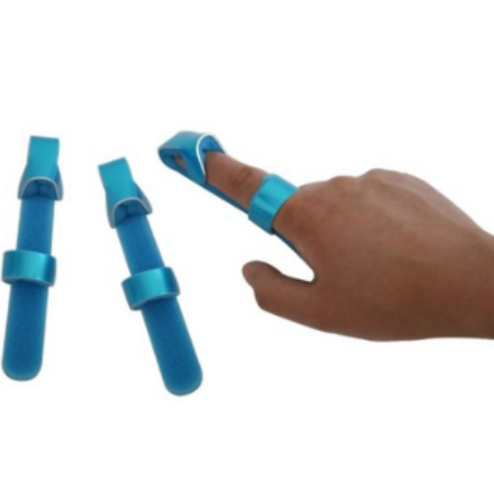
Aluminum-core splints: Highly adjustable, often used in emergency settings. They fatigue at bend points after repeated manipulation.
A common mistake is treating these as interchangeable. A splint that works beautifully for a two-week mallet finger protocol may fail badly for a six-week tendon repair, simply because the material creeps under sustained load. According to the American Society of Hand Therapists, material creep is one of the leading causes of splint failure in long-duration protocols, though it rarely shows up in product marketing.
Fit and Anatomical Conformance: Where Cheap Splints Fall Apart
Fit is the single most predictive factor for whether a splint gets worn. A device that shifts, pinches, or leaves the distal interphalangeal joint floating will be removed by the patient within days, often without telling the clinician.
Three fit variables deserve close attention:
-
Circumferential contact: The splint should contact the finger around most of its circumference, not just the top surface. Partial contact creates pressure points.
-
Joint axis alignment: For hinge-like immobilization, the splint's bend line must sit over the joint axis. A few millimeters off, and the joint is being levered rather than held.
-
Distal edge placement: The splint should end short of the fingertip pulp to preserve sensation, unless the protocol specifically calls for tip coverage.
During a hand clinic audit in a southern chemical plant's occupational health unit, therapists found that over 40 percent of returning workers had been issued splints that were either too loose at the proximal phalanx or extended past the distal crease. The fix was not a new product line. It was a sizing protocol and a short training session. That finding mirrors what many clinics see: the splint is rarely the problem, the selection process is.
Comparing Common Static Splint Categories
| Splint Category | Typical Material | Best Suited For | Key Limitation | Relative Cost |
|---|---|---|---|---|
| Mallet finger splint | LTTP or molded plastic | DIP joint extension | Skin maceration under prolonged wear | Low |
| Boutonniere splint | Thermoplastic composite | PIP extension with DIP flexion | Bulkiness limits grip | Medium |
| Flexor tendon repair splint | Polypropylene | Dorsal blocking | Requires precise fit | Medium |
| Aluminum foam splint | Aluminum core, foam | Acute injury, ED use | Fatigue at bend points | Low |
| Custom-molded orthosis | LTTP | Complex deformities | Fabrication time | High |
The table is not a ranking. It is a map. The right choice depends on diagnosis, wear duration, patient compliance history, and whether the clinician or the patient will manage adjustments.
Clinical Evidence and What the Standards Actually Say
Evidence for static splinting is older than most people assume, but it is not weak. The foundational principle, that sustained immobilization at a controlled angle promotes collagen alignment, traces back to basic tendon healing research from the 1970s and has been refined since. Current guidance from hand therapy bodies generally recommends:
-
Immobilization angles tailored to the specific tendon or joint involved, not a one-size protocol.
-
Regular skin checks, especially in the first 72 hours.
-
Reassessment at defined intervals, typically weekly for acute injuries.
A 2023 review in a peer-reviewed rehabilitation journal noted that splint-related complications, including skin irritation and joint stiffness, occur in roughly 15 to 25 percent of cases, with most being preventable through better fit and earlier follow-up. That number is worth sitting with. It suggests the failure mode is usually process, not product.
Practical Selection Workflow for Clinics and Procurement Teams
For anyone building a formulary or restocking a clinic, a structured approach saves time and reduces returns.
-
Start with diagnosis categories, not product names. Map each common condition to a splint type.
-
Test fit on a range of hand sizes before committing to bulk orders. A single size rarely covers an adult population.
-
Check material behavior under sustained load, not just initial rigidity.
-
Confirm that the supplier can provide consistent dimensions across batches. Variability between lots is a hidden cost.
-
Ask about mold and tooling availability if custom shapes are needed later.
Procurement teams often overlook the last two points. A splint that fits perfectly in a sample but arrives two millimeters narrower in the next shipment will generate complaints that look like clinical failures but are actually manufacturing variance.
Matching Supply Reliability to Clinical Demand
Splint demand is not steady. Flu seasons, construction cycles, and post-surgical scheduling all create spikes that a clinic cannot always predict. For distributors and larger facilities, supply reliability becomes a clinical issue, not just a purchasing one. A delayed shipment of mallet finger splints means patients wait, and waiting patients sometimes improvise.
This is where manufacturing depth matters. Onebrace, a medical protective equipment manufacturer, supports its product lines with a research and development team averaging eight years of specialized experience, which helps resolve fit and material issues quickly when they surface. The company operates 12 complete production lines and maintains a library of more than 1,000 mold designs, with a monthly output exceeding one million sets. That scale does not guarantee quality on its own, but it does mean tooling for a specific splint geometry is likely to already exist, which shortens lead times when a clinic needs a consistent supply of a proven design.
The 2026 landscape for finger static splints is not about novelty. It is about matching the right material and fit to the right diagnosis, then making sure the supply chain can keep up. Get those three things right, and the rest tends to follow.
Table of Contents
- Why Static Finger Splints Still Matter in Modern Hand Therapy
- Material Selection: Thermoplastics, Foams, and the Trade-offs Nobody Mentions
- Fit and Anatomical Conformance: Where Cheap Splints Fall Apart
- Comparing Common Static Splint Categories
- Clinical Evidence and What the Standards Actually Say
- Practical Selection Workflow for Clinics and Procurement Teams
- Matching Supply Reliability to Clinical Demand