 EN
EN
Understanding Rehabilitation Orthopedic Walking Boot Types and Clinical Indications
CAM, Air Cast, and ROM Boots: Functional Differences and Injury-Specific Applications
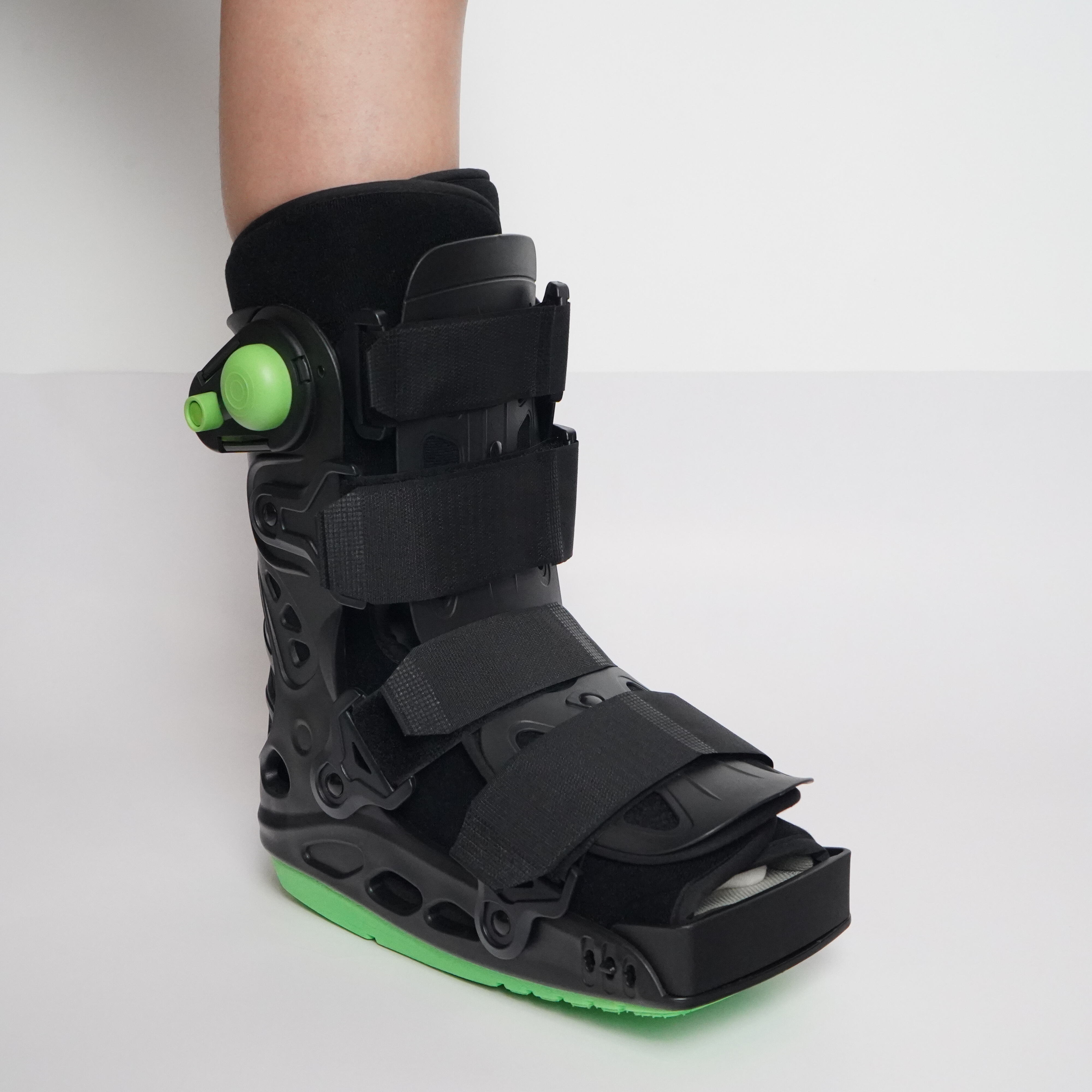
Orthopedic walking boots designed for rehabilitation come in different types depending on how tissues heal and what kind of injury someone has. CAM boots provide complete immobilization which makes them great when dealing with fresh ankle fractures or after surgery where any movement needs to stop completely. Then there are those pneumatic Air Cast models with their adjustable air bladders that help control swelling as soft tissues recover. These tend to be the go to option for serious ligament sprains because they can adapt as the swelling changes over time. Range of motion boots have hinges built into them so they limit certain movements like bending upwards at the ankle but still allow some downward motion. This helps people start putting weight on their foot again after things like Achilles tendon repairs. Studies from the American Orthopaedic Foot & Ankle Society back this up showing around a 30% reduction in joint stiffness compared to being stuck in a totally rigid boot, although patients really need to stick with the prescribed protocol to avoid instability issues. Choosing the correct boot basically comes down to matching how much support is needed with what stage the body is at in healing. Rigid support works best for bones healing together, moderate pressure helps ligaments mend properly, and gradual movement is crucial for tendons getting back to normal function. New research looking at gait patterns during rehabilitation has confirmed what many clinicians already suspected: the way these boots are designed mechanically actually affects how well tendons move and distribute forces across joints, which plays a big role in whether someone recovers full functionality.
Low-Top vs. High-Top Designs for Ankle Fractures, Achilles Injuries, and Severe Sprains
The height of a boot really affects how well it controls things like axial alignment, rotational stability, and where the body distributes weight. Low top models stop just below those bony bumps on the ankles called malleoli. They give decent side-to-side support but still let the shin bone rotate naturally, which makes them good for people with midfoot issues such as Lisfranc problems or foot conditions that need some flexibility. High top boots go way above the ankle joint itself. These provide much better control both sides to side and when twisting, so they work best for folks with unstable ankle breaks, bad sprains, or heel and ankle bone injuries that need solid stability along the axis. When dealing with torn Achilles tendons, high tops can cut down on downward pointing of the foot by quite a bit, maybe around 40% less strain on the tendon when starting to put weight on compared to low tops according to some research from Biomechanics Research Group back in 2023. Although high tops offer better protection for the body's mechanics, many find low tops more comfortable if they have to sit around without putting weight on their feet for long periods, especially older adults who might struggle with compliance otherwise. Other considerations matter too. People with diabetes generally do better with high tops because they spread out pressure better across the foot. Athletes usually want low tops once they get into rehab phase two since they need more movement freedom for training purposes.
Key Design Features That Optimize Rehabilitation Outcomes
The design of a rehabilitation orthopedic walking boot directly impacts recovery efficacy, with specialized features addressing distinct biomechanical needs during healing.
Rocker Sole Geometry and Its Role in Gait Re-education During Early Recovery
Rocker soles change how weight is distributed across the foot by moving the pivot point away from areas that might be injured. Studies show they can cut down pressure on the ball of the foot by around 40% when compared with regular flat soles according to research published in the Journal of Orthopedic Research back in 2023. The curved shape helps people walk more naturally from heel to toe when they need assistance getting around. This makes it easier for patients recovering from injuries to work on rebuilding their walking patterns again. It also protects healing bones or repaired tendons during those crucial first weeks after surgery. Rocker soles aren't just sitting there doing nothing like regular shoe soles do. Instead, they encourage movement patterns that get the body ready to move properly once someone starts returning to normal activities.
Adjustable Straps, Pneumatic Bladders, and Hinged ROM Controls for Progressive Support
| Feature | Acute Phase Function | Transition Phase Adaptation |
|---|---|---|
| Pneumatic Bladders | Customizable compression for edema control | Gradual pressure reduction |
| Hinged Controls | Locked position for immobilization | Incremental ROM increases (e.g., 0° to 20° dorsiflexion) |
| Multi-point Straps | Stabilization via shear force dispersion | Tension loosening for activity tolerance |
This modular adjustability enables clinicians to align mechanical support with evolving tissue integrity. Pneumatic chambers accommodate daily volume changes from swelling; articulated hinges allow precise, staged mobilization as collagen maturation progresses. Such phased adaptability correlates with 32% higher adherence across 8-week recovery programs (Clinical Rehabilitation, 2024).
Aligning Boot Selection with Recovery Stage and Patient-Specific Factors
Acute Swelling Management vs. Transitional Mobility: Matching Rigidity to Phase of Healing
When someone is recovering early on after an injury, they need special boots designed not just to restrict movement but actually manage how weight is distributed. These rigid shell CAM boots help reduce swelling during those first few days of inflammation. Studies from the CDC back this up showing around two thirds of patients experience less swelling when wearing them, plus these boots protect areas where surgery was done or bones are healing. The non compressible shells combined with fixed hinges and locking systems make sure people stick to their no weight bearing instructions without making things worse for their swollen tissues.
During recovery from injury, the body needs to move from being rigid to gradually gaining support. Special boots equipped with air bladders or adjustable straps allow for controlled improvements in movement range and how much weight can be placed on the affected area. These devices help repair tendons and stabilize broken bones without damaging surrounding tissues. Finding the right balance is absolutely critical in treatment. If someone gets too flexible too soon, there's a real chance of reinjuring themselves. But keeping things too stiff for too long also causes problems it slows down muscle memory development and makes walking patterns take longer to return to normal after an injury.
Patient-specific factors refine this decision:
- Diabetic patients require pressure-redistributing liners and high-top coverage to mitigate ulcer risk
- Those with fragile skin need seamless, non-abrasive interiors to prevent breakdown
- Higher BMI patients benefit from reinforced struts and wider base designs for enhanced stability
Aligning boot mechanics to both biological healing stage and individual physiology—not just diagnosis—directly shapes gait restoration timelines, tissue quality, and long-term functional outcomes.
Ensuring Long-Term Adherence Through Comfort, Fit, and Real-World Usability
How well patients stick with their treatment plans depends more on how easy these products are to use every day rather than just following a doctor's orders. The soft, breathable inner layers help keep skin dry and comfortable when worn for long periods, which matters a lot when someone experiences swelling changes throughout the day. Closure mechanisms that can be adjusted let people get proper pressure around their calves even as fluid levels change, all without cutting off blood flow. These modern designs combine lightweight materials with built-in foot shapes that make walking less tiring while still keeping balance intact something particularly important for seniors or anyone dealing with multiple health issues at once. Plus, the slim profiles work great with regular shoes most folks already own, making it easier to go out shopping or meet friends without feeling self conscious about what they're wearing.
Clinicians consistently observe that ergonomic design—balancing sufficient rigidity with adaptive comfort—drives consistent wear. Per clinical practice guidelines, orthopedic teams report near 30% higher compliance rates with boots incorporating these usability-focused features. Ultimately, adherence isn’t a behavioral challenge—it’s a design requirement.
Ready to Elevate Your OEM Rehabilitation Walking Boot Lineup?
Rehabilitation orthopedic walking boots are the backbone of your medical device portfolio— subpar design, clinical misalignment, or poor usability can derail B2B sales and erode brand trust. For OEM partners, the right walking boot line combines clinical credibility, modular customization, and global compliance— all critical to winning partnerships with clinics, distributors, and healthcare systems.
Our team specializes in OEM rehabilitation walking boot solutions rooted in orthopedic expertise, clinical validation, and B2B scalability. With 10+ years of OEM/ODM experience, we offer:
- End-to-end customization (rigidity, design features, materials) to target your niche market (diabetic care, sports rehab, post-surgical recovery).
- Full compliance with global standards (ISO 13485, FDA Class II, EU MDR) to streamline your market entry.
- Clinical data integration (pressure mapping, gait analysis) to differentiate your OEM line.
- Scalable production with supply chain redundancy— ensuring on-time delivery for your B2B orders.
Contact us today for a no-obligation consultation, free sample testing, or to discuss your OEM requirements (clinical targets, brand alignment, compliance needs). Let’s build a high-performance, clinically validated walking boot line that drives your B2B growth and sets you apart in the competitive orthopedic device market.
Table of Contents
- Understanding Rehabilitation Orthopedic Walking Boot Types and Clinical Indications
- Key Design Features That Optimize Rehabilitation Outcomes
- Aligning Boot Selection with Recovery Stage and Patient-Specific Factors
- Ensuring Long-Term Adherence Through Comfort, Fit, and Real-World Usability
- Ready to Elevate Your OEM Rehabilitation Walking Boot Lineup?