 EN
EN

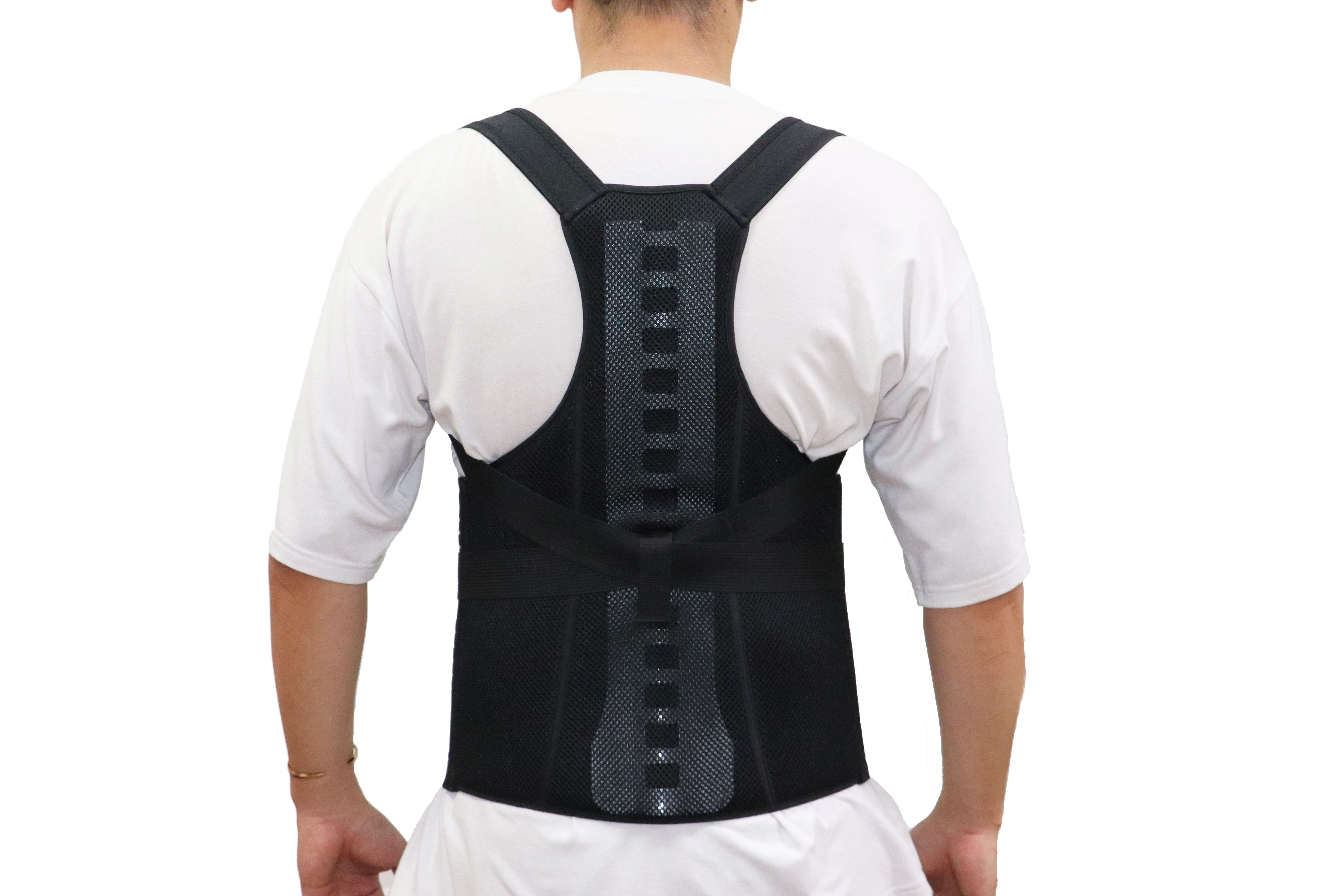
The Biomechanical Necessity of Adjustable Ergonomic Back Support
How Poor Sitting Posture Disrupts Spinal Alignment and Triggers Chronic Strain
Prolonged sitting without proper support collapses the spine’s natural S-curve—especially in the lumbar region—flattening lordosis and forcing intervertebral discs into asymmetric compression. This misalignment increases disc stress by approximately 40% compared to neutral postures (Spine Journal, 2023). As muscles fatigue compensating for pelvic tilt and forward head position, trigger points develop in the trapezius and erector spinae. Over time, these biomechanical stresses accelerate disc degeneration and establish self-perpetuating pain cycles. Without intervention, poor posture becomes neurologically encoded—reinforcing harmful alignment even during standing or dynamic tasks. Reversing this requires targeted ergonomic support that actively restores and maintains spinal neutrality.
Lumbar Lordosis: Why Natural Spinal Curvature Demands Personalized Support
The lumbar spine’s inward curvature varies widely across individuals due to anatomical differences—including pelvic incidence angle, torso height, and vertebral spacing—with lordotic angles ranging from 20° to 60° (Orthopaedic Research International, 2023). Fixed backrests cannot accommodate this variability, often generating pressure mismatches: excessive curvature support compresses discs in hyperlordotic users, while insufficient reinforcement induces kyphotic strain in those with flatter spines. Adjustable ergonomic back support resolves this through three-dimensional calibration—allowing users to align height precisely with their lumbar apex, tune depth to match lordosis severity, and select firmness that distributes load without creating pressure points. This triaxial customization preserves nucleus pulposus hydration and optimal facet joint spacing throughout extended sitting.
How Adjustable Ergonomic Back Support Delivers True Personalization
Accounting for Anatomical Variability: Height, Depth, and Curvature Differences
Human spines exhibit significant anatomical diversity—not only in lumbar lordosis depth but also in torso-to-pelvis proportions and pelvic tilt. A 2023 anthropometric study found ±15% variance in lumbar curvature depth among adults, explaining why fixed supports fail over one-third of users. Adjustable mechanisms address this by enabling precise micro-modifications: vertical positioning accommodates torso length differences, while depth adjustment matches individual spinal concavity. For example, users with pronounced lordosis require deeper support to prevent disc compression; those with flatter lumbar profiles benefit from minimal protrusion. When properly calibrated, the support aligns directly with the S1–L5 junction—eliminating pressure points and reinforcing neutral alignment.
Three-Dimensional Adjustability: Height, Depth, and Firmness as Calibration Essentials
True personalization hinges on three interdependent axes: height, depth, and firmness. Height adjustability ensures contact at the lumbar apex—not higher up the thoracic spine—where support is biomechanically effective. Depth control governs protrusion intensity, maintaining the spine’s neutral S-shape without encouraging hyperextension or collapse. Firmness modulation accommodates physiological differences in tissue density and muscle tone: high-resistance settings suit muscular users needing active stabilization, while progressive give benefits those requiring gentle, responsive feedback. Together, these adjustments transform static seating into a dynamic interface—one that adapts in real time to subtle shifts in posture and task demands.
Evidence That Adjustable Ergonomic Back Support Outperforms Fixed Solutions
Clinical and Workplace Data: Reduced Discomfort, Absenteeism, and Musculoskeletal Risk
Field studies consistently show employees using adjustable lumbar support report 28% fewer musculoskeletal complaints than peers using fixed alternatives. This adaptability translates directly into measurable workplace outcomes: task-related discomfort drops by up to 42% during prolonged sitting, and absenteeism linked to low-back strain declines significantly. By dynamically conforming to natural spinal curvature, adjustable support prevents the cumulative microtrauma caused by static postures—reducing both acute discomfort and long-term injury risk.
Standards Evolution: ISO 9241-5 and ANSI/BIFMA G1-2022 Mandate Dynamic Adjustability
Contemporary ergonomic standards now treat dynamic adjustability not as optional—but as essential. ISO 9241-5 (Ergonomics of Human-System Interaction) and ANSI/BIFMA G1-2022 (Guideline for General Office Ergonomics) explicitly require three-dimensional lumbar support customization—specifying height, depth, and resistance adjustments—to address anatomical variability. These protocols reflect a consensus that fixed designs fall short of protecting users across diverse body types and work patterns, establishing adjustable support as the compliance baseline for occupational health and safety.
Frequently Asked Questions
Why is adjustable ergonomic back support important?
Adjustable ergonomic back support is crucial because it helps maintain the spine's natural alignment, reducing stress and preventing disc compression. Customizable support can significantly reduce discomfort, especially during prolonged sitting.
What are the main benefits of adjustable back support over fixed solutions?
Adjustable back support offers better personalization by accommodating anatomical variability such as height, depth, and curvature differences. This leads to reduced musculoskeletal complaints and improved overall comfort.
How does ergonomic back support improve workplace outcomes?
By providing dynamic support and maintaining neutral spinal alignment, ergonomic back support reduces discomfort, absenteeism, and musculoskeletal risks. It also promotes a healthier and more productive work environment.
What standards support the use of adjustable ergonomic back support?
The use of adjustable ergonomic back support is supported by standards such as ISO 9241-5 and ANSI/BIFMA G1-2022, which mandate three-dimensional lumbar support customization for user safety and comfort.
Table of Contents
-
The Biomechanical Necessity of Adjustable Ergonomic Back Support
- How Poor Sitting Posture Disrupts Spinal Alignment and Triggers Chronic Strain
- Lumbar Lordosis: Why Natural Spinal Curvature Demands Personalized Support
- How Adjustable Ergonomic Back Support Delivers True Personalization
- Evidence That Adjustable Ergonomic Back Support Outperforms Fixed Solutions
- Frequently Asked Questions