 EN
EN

When an Off the Shelf Brace Returns to Your Warehouse
Every orthopedic distributor knows the sinking feeling of opening a returned goods box and finding an ankle brace that simply did not work for the end user. The patient may have reported that the brace felt too bulky inside their work boot, or the physical therapist noted that it did not provide enough lateral support for a grade two inversion sprain. The clinic that ordered it decided to switch to a competing brand, and the distributor is left holding inventory that no longer moves at full price. This scenario replays itself across the industry when a product catalog is built around a single generic brace model that tries to cover every ankle indication and ends up serving none of them particularly well. Comparing custom ankle brace OEM models is not an academic exercise. It is the commercial foundation for building a product line that actually meets the distinct needs of post operative recovery, athletic return to play, chronic instability management, and daily occupational support.
The Engineering Logic Behind Each Ankle Brace Architecture
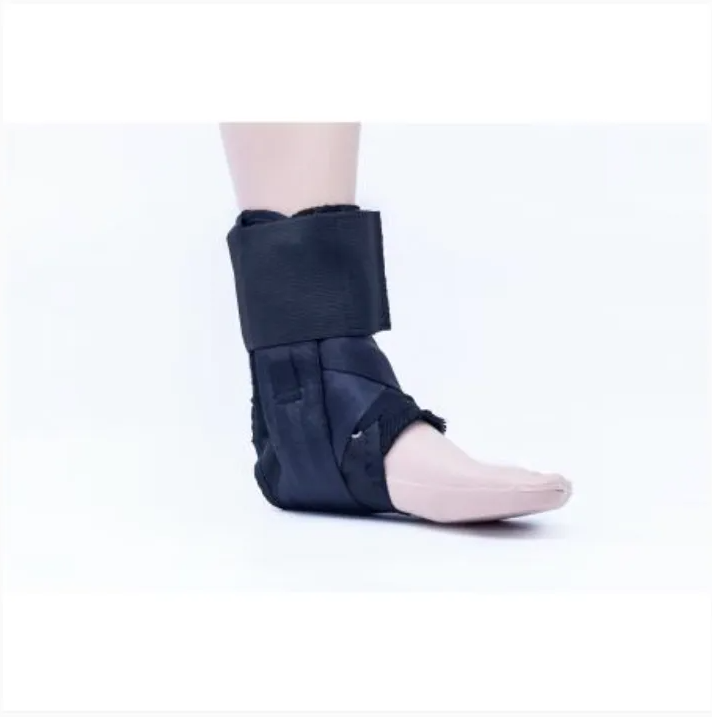
The ankle is a complex joint that moves in multiple planes, and no single brace architecture addresses all of its vulnerabilities equally. Understanding the engineering intent behind each model is essential to matching the right brace to the right clinical application. The lace up model is the most fundamental architecture. It provides circumferential compression that reduces edema and delivers proprioceptive feedback, reminding the wearer where their ankle is in space without rigidly blocking movement. This model excels for mild sprains and chronic instability where the patient needs support but not immobilization. The hinged model introduces mechanical control in the sagittal plane. Molded plastic or carbon fiber hinges permit natural dorsiflexion and plantarflexion while blocking excessive inversion and eversion. This architecture serves the athlete transitioning back to sport, where running and jumping demand free ankle motion but lateral protection remains critical. The rigid frame model represents the highest level of mechanical constraint. A full shell with integrated stays locks down both inversion and eversion almost completely, making it the appropriate choice for severe ligament ruptures, post surgical protection, and situations where any lateral movement risks re injury. Selecting the right OEM model means understanding which mechanical function the end user actually needs.
Why the Inner Layer Decides Whether a Patient Actually Wears It
A brace can be engineered with perfect biomechanics and still fail clinically if the patient refuses to wear it. The most common reason for non compliance is not discomfort from the structural frame but from the inner layer against the skin. Traditional neoprene liners trap heat and moisture, creating a hot, sweaty environment that becomes intolerable during extended wear or physical activity. The comparison between OEM models must therefore include the liner material as a primary variable. Airprene offers a compromise, introducing perforations that allow some air exchange while retaining the compression properties of neoprene. Spacer mesh liners create a true air gap between the skin and the shell, actively wicking moisture away. The most advanced option emerging in OEM manufacturing is 3D knitted liners with variable knit zones that place cushioning over bony prominences and ventilation channels over muscle bellies. A hinged brace with a 3D knitted liner represents a fundamentally different product from a hinged brace with a neoprene liner, even if the external hinge mechanism is identical. The distributor who compares OEM models at the material level can offer their clinic customers a brace that patients will actually wear for the prescribed duration.
How the Brace Model Determines Your Regulatory Filing Route
The choice between a lace up, hinged, or rigid frame ankle brace is not just a clinical or commercial decision. It is a regulatory one that directly affects how the product can be marketed and where it can be sold. Medical device classification frameworks in most major markets draw a line between simple elastic or fabric supports and devices that incorporate rigid mechanical components. A basic lace up ankle sleeve may qualify as a Class I device with minimal registration requirements. A hinged brace with molded plastic components that claim to limit range of motion steps into a different classification tier, often requiring a more detailed technical file or a premarket notification pathway. A rigid frame post operative brace with a hard shell and locking hinges may fall into an even more scrutinized category. For a distributor building a private label brand, the OEM partner must be able to provide the documentation that matches the regulatory classification of each model. A manufacturer who treats every brace as if it has the same paperwork requirements is setting their distributor up for a compliance gap.
Not All OEM Partnerships Offer the Same Level of Control
The term OEM gets used loosely in the orthopedic bracing industry, and a distributor needs to understand exactly what kind of partnership they are entering. One model is the fully integrated manufacturer. This partner develops patterns in house, cuts and sews fabric components, molds plastic stays and hinges, and performs final assembly and inspection under one quality management system. The alternative is a trading or coordination model, where a company sources fabric from one factory, plastic components from another, and assembly from a third, acting as a project manager rather than a manufacturer. The difference shows up in the details. When a sizing adjustment is needed on a lace up model, the integrated manufacturer can modify the pattern, test the new fit, and approve production within a controlled loop. The coordinator must relay the request across three different suppliers and hope the result matches the intent. For a distributor comparing OEM models, the depth of the manufacturer's in house capability is often a better predictor of long term reliability than the unit price on a quotation.
Bringing a Customized Ankle Brace Program to Market
Building a complete ankle brace product line that spans lace up, hinged, and rigid frame models requires more than sourcing each style from a different factory. A cohesive brand portfolio demands consistent material quality, uniform sizing logic, and regulatory documentation that follows the same format across every model. When a clinic buys a lace up brace and a hinged brace from the same brand, they expect the liner fabric to feel familiar, the strap system to operate intuitively, and the instruction insert to reflect a consistent clinical voice. Delivering that coherence requires a manufacturing partner who controls the entire development and production process. ONE BRACE offers this integrated OEM capability, managing pattern engineering, material selection, component fabrication, and final assembly within a single quality controlled environment. For distributors comparing ankle brace models and planning a full category launch, that integration translates into faster development timelines, consistent brand identity, and the confidence that every model in the line will meet the same regulatory and quality standards when it reaches the clinic shelf.
Table of Contents
- When an Off the Shelf Brace Returns to Your Warehouse
- The Engineering Logic Behind Each Ankle Brace Architecture
- Why the Inner Layer Decides Whether a Patient Actually Wears It
- How the Brace Model Determines Your Regulatory Filing Route
- Not All OEM Partnerships Offer the Same Level of Control
- Bringing a Customized Ankle Brace Program to Market